
 CrossTraining announces the second Timothy Project recipient of 2012. This project starts with a group of children living in subsidized housing in South West Calgary – as part of the immigrant community, they don’t have much. Here is where Christian Life Assembly is trying to make a difference. Three years ago, CLA began using soccer camps as an outreach to those families and last year marked the first time the group brought their camp to the housing area to make the camps more accessible for the children.

But CLA aren’t doing the camps alone. They partner with a Christian man from Rwanda who began a free, saturday soccer club in the housing development where he lives. The club has been running every Saturday for two years now and serves to give kids a sense of belonging as well as teach skills that build confidence, character, and self-esteem.
 Part of what CLA offers to campers are snacks and a short devotional. They also invite Canadian children to join in the camps in order to help the immigrant children integrate into Canadian culture and develop new friendships and relationships. “Soccer Club,” as it is known, serves as one connection point, among several programs, for nearly 60 children and their families from various nationalities, faiths and socio-economic origins.
 The Timothy Project would include partnering to sponsor children to attend this year’s week long soccer camp. With CLA aiming to build a long term relationships with the families in the housing area, building trust and sharing about God’s love are integral parts to the camps offered to the children. CLA is hoping to find sponsorship for 50 children this year at a cost of $60 per child. The camp will be held August 20th to 24th.
To make a donation to help support the Calgary project please use the PayPal box below and mark your gift CXT: Calgary. Thanks for your support!


 For example, one ancient act for demonstrating a covenant relationship was the exchange of coats. Here, two individuals would exchange their cloaks which were the symbol of their identity with a particular tribe or group of people. The dyes, colors, and patterns would have been common amongst those people and so when the two exchanged the cloaks it was a way to signify that each was accepting, embracing, adopting the identity of the other. It was a sign of solidarity, a sign of commitment. This is perhaps best illustrated by the exchange of jerseys that occurs after a match, but the supporters and fans also participate in this show of commitment. The wearing of team colors – whether shirts or scarves – are a way of trading their own, personal identity for the identity of the team.
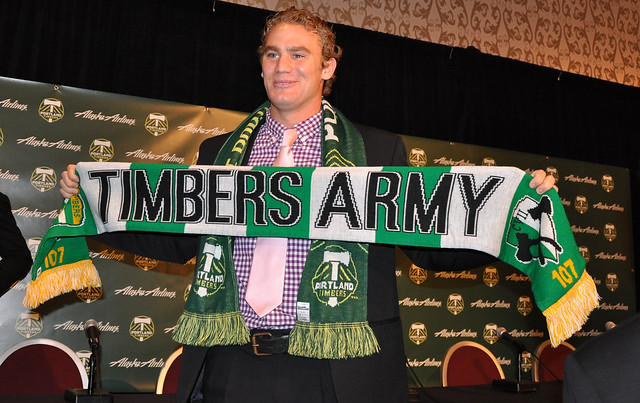 Another ancient tradition in covenantal relationship is the exchange of names. Here, an individual also takes on another identity. In ancient Hebrew tradition, the name for God was often added to the name of an individual who embraced or believed in God. For example, Abram becomes Abraham and Sarai becomes Sarah as they enter into covenant relationship with God. It is not uncommon to hear supporters in the stands declaring that they are part of the team, that they are one with the players that are out on the field. The scarf is an item that also becomes an adoption of a unique name that unifies individuals into a common people.
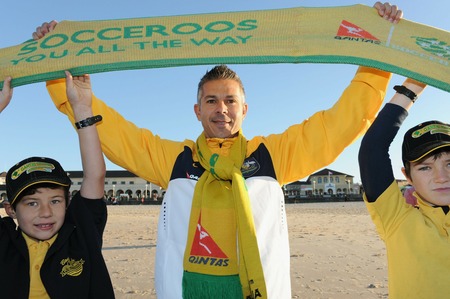 But perhaps the most telling ancient tradition that most closely represents the tradition of the scarf is the covenant cut. In ancient times, two people making a blood covenant, would make a cut on the wrist. They would then shake hands and let the blood co-mingle representing that two lives were becoming one. As time passed, the way that one would identify people of the covenant would be with the raise of the hand which revealed the scar. This is where the practice of waving the hand and exposing the wrist in greeting and also in oath-taking may have evolved from.

 The Czech Republic is the most atheistic country in Europe with more people claiming to be atheists than members of any organized religion. Years of communist oppression have left the Czech people struggling with the idea of a personal God who cares deeply about them. In the Czech Republic, only one person in three hundred claims to be a Christian. However since the fall of the Soviet Union at the end of the 20th century, a new hope has slowly risen in the Czech Republic, especially among the nation’s youth. Young people throughout Eastern Europe live in a changing world their parents never knew – a place once dominated by government sanctioned atheism, is now filled with opportunity and freedom. The nation’s youth are awakening to a hunger for “something more” that freedom, entertainment and technology cannot fill – a hunger for spiritual fulfillment found only in a personal relationship with a loving God.
 Toronto FC, at one time one of Major League Soccer’s bright stars, has reached an embarrassing low. Starting the 2012 season with a league record of 0-8, the Toronto club has yet to get a win, or even a draw (tie), for any points on the season. The accompanying sense of frustration from the losing streak is one of the places where chaplains are often called to minister and speak into – sometimes with mixed results.
 No team likes to begin the season in a deep hole. And no team wants the dubious distinction of being one of the most ineffective or hapless teams of all time. Although, the Detroit Lions, at 0-16 in 2008 (the sum total of all league games for one season in the National Football League), will probably carry the distinction of being perhaps the worst team in modern sporting history for many years to come.
 So a typical question that people ask is, “Does God really care?” (about sports, results, wins, etc.). Serving as a chaplain for a professional sport team for over 10 years, I have wrestled with this question often. What has been helpful for me is the example from the life and ministry of Saint Patrick. He would enter into a village and share the Good News of Jesus, and during the week he (and his team) would go out with the villagers and pray over and bless the streams (to produce fish) and for the fields (to produce crops) and for the woods (to produce game). Patrick realized that in praying for “our daily bread” involves how food gets put on the table. For the athlete, this means having success in their work, in their profession.

