
 Whilst scanning the Twitterverse a few weeks ago, former Colorado Rapids Forward Andre Aukpan (@auakpan), now with New York Red Bulls, highlighted a story on the National Football League’s Rashard Mendenhall retiring at the age of 26. The story (written by Mendenhall) presents a odd perspective that rarely exists in professional sport these days. To understand that the world sees him more as an entertainer, and to make a decision not to continue to punish his body for the sake of entertainment shows a depth of wisdom and insight for someone as young as Mendenhall. While perhaps not a player with the same professional athletic achievements as Mendenhall, Rapids defender Kory Kindle’s retirement earlier this year was along the same vein. What is one to make out of young men seeking to leave professional sports – in spite of potential earnings or achievements that might still be gained? I believe it is a good thing on several accounts…
 First, with the popularity of sports in modern-day culture, many young athletes can feel trapped – they have sometimes abandoned education for the sake of entering sports early. Young athletes have many times even missed out on typical social and mental growth and well-being (sports taking primary importance in life). In some cases, they have missed crucial developmental stages or “rites of passage” moments for the sake of the sport. When it comes time for the end of a career – many can feel trapped because the sports world is all that they have known, all that they have invested in.
Second, it is rare to find what I call the “prepared athlete.” There is so much superstition built into sports psychology today that many players believe something along these lines:
If I think about what is next after sports, I will automatically lower my ability to achieve something higher because of my mentality. I can only focus on being an athlete.
Thus, many athletes find themselves in a critical state when the moment to retire or leave the sport comes (whether by their choice or not) because they have not thought much about who they are, the abilities they have, or the passions they have outside of the sports world. This is especially dangerous for professional athletes who make less money (although some might argue that the lower pay scale may actually help keep them in touch with reality) – if they haven’t given consideration to what lies beyond professional sport they often find themselves at a disadvantage when it comes to continuing their education or finding work.

Scottie Pippen lost significant amounts of money with poor financial dealings.
Finally, we have seen many examples of professional athletes that have mismanaged or been poor stewards of the exorbitant amounts of money that they have received – from boxing stars like Mike Tyson, to National Basketball Association players like Scottie Pippen – many athletes make poor financial choices. In fact, some have said that 80% of National Football League players are filing for bankruptcy 2 years after finishing playing the sport.
It is because of these particular reasons, that I find my work as a chaplain (and our intentional focus on holistic care) must necessarily include encouraging wisdom and growth towards the post-career choices that athletes (and coaches) must sometimes make. Whether by utilizing career or personality testing or providing vocational counseling or referring them onto more specific, professional resources I have found it increasingly important to have open dialogue with the players that come and play for the teams that I serve – from high school students to the professional athletes. When I see a player calling it quits and walking away from the game with preparation and confidence, I breathe a little easier knowing that they will not have to face as much of the pain of retiring early as some of their compatriots.
Blessings,

Rev. Brad Kenney


 With World Cup 2014 Brazil, just a few months away, millions are preparing for the largest event in the world to capture the imaginations and dreams of people young and old, from hundreds of different countries, and many different backgrounds.
 Athletes in Action is one such group and they have produced a DVD featuring soccer player testimonies for use around the world. The DVD known as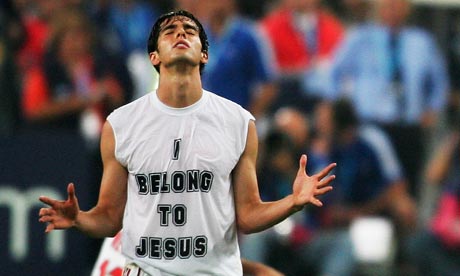


 Firsts. This season, the Colorado Rapids will encounter many firsts – moments where the team and organization find themselves as never before. For example, 2014 is the first season that the team is being coached by a former player (
 As a chaplain, much of my role is to remind people of
  After a Houston Chronicle article in 2009 declared the city of Juarez, Mexico the “most violent zone in the world outside of declared war zones”1 most Americans and many Christian mission organizations stopped travel and efforts to help the poor of the estimated 1.5 million people who call the city home. The violence spawning from the drug cartel wars has claimed many lives and mission work in the city was deemed too risky. But there were a few organizations that still dared to carry on the work – meet
  Recently, Steve McConaghie, a pastor at Cherry Hills Community Church was invited to sit on