The typical coaching contract for coaches in Major League Soccer is three years, though the average length of stay is somewhere closer to 2 years (2.3 according to one source). If those statistics are comparative (there is some question to how scientific) to other leagues, then MLS coaches are among the lowest in terms of average length of stay among professional sports leagues (NBA, NFL, NHL, MLB) as suggested by this New York Times article written in 2008. So what has to happen in that 2.3 years that an MLS coach takes the reins? There are several things that a new head coach must undertake, but before looking at a few important tasks, let’s look at a few reasons for changes in the management of a club.
1. Rebuilding – a typical reason for replacing a head coach in professional sport is because of an under-performing team. Here, ownership and fans alike, often give new coaches leniency in the demands for the teams improvement. The coach works to rebuild (sometimes with a few remaining pieces or from the “ground-up”) by bringing in new staff (loyal or familiar to the coach) and making a lot of personnel decisions (players, strategy, tactics, etc.). Rebuilding situations can often garner a coach more than the average length of stay provided that team executives see marked improvement and progress.
2. Replacing – the truth is, in the world of business and sport, people fall out of favor. Relationships sour, opinions and philosophies differ, and people sometimes just plainly do not get along. Other reasons for replacing may not be for the typical, negative situations that occur in sport – for example, a head coach leaving for a better or higher position or retiring. Replacing can present challenges for a new head coach depending on the type of legacy and success that a previous coach may have had. Sometimes this can create tremendous pressure – the new head coach being called on to live up to certain high expectations (from the past or for the future).
But, whatever the reason(s) for making a change at the helm, there are certain tasks for a new head coach to accomplish that are critical within that short time frame. I suggest a few below:
1. Cast a vision – the biblical adage “Without vision the people will perish” (Exodus 32:35) holds true for teams in sport as well as people in nations. If a team (and all the components that comprise a team) does not know where it is going and have someone to lead them there, there will be a tremendous amount of struggle and discontent.
2. Build unity – not everyone will agree with the philosophy or practice of the top man. And many will show their true colors within a short amount of time – a coach has to deal with those who are not unified in the vision and direction of the team because those who are not on board will in the least slow down the progress of a team or at the worst, disrupt and thwart the teams direction.
3. Achieve success – regardless of words and promises of ownership and executive management, a modicum of success is desired. Sometimes those results are tangibly laid out before coaches as targets to reach. Subjectivity comes to play with each organization on the realistic nature of those particular goals.
While not an exhaustive list of coaching tasks, the above is fairly representative of some basic demands on a head coach in any sport (and many of these can translate into the work force as well). The question remains though, can a head coach accomplish these things in 2.3 years (MLS)? There are other influencing factors for consideration (for example, how supportive a team owner may be – whether in resourcing or financing or how much power or control is given to a head coach, etc.) that may make one coaching situation easier or more difficult than another, but hopefully it is clear to see how difficult it is to keep coaching.
Friends reading this, you might wonder why this musing and contemplation – but it is a consideration that weighs heavily on the team chaplain. If the average length of stay in MLS is 2.3 years, that is not long for building trust, relationship, and investing into someone’s life – especially, when this work is often limited to the time and resource constraints of one or two individuals. I would ask that your prayers be two-fold: first, for the chaplains of CrossTraining as we minister to people in this volatile work environment. Second, for the coaches and individuals themselves, as many have families and others dependent upon them. It can be a traumatic and difficult task to “keep coaching” as it means likely and frequent upheavals and moves, immense pressure and burdens to succeed, and difficulty in opening up and trusting others (like the chaplain) who serve for many years under many different coaches or leaders.
If my words of encouragement to a coach are “keep coaching,” then perhaps the word to us chaplains in sport might be “keep chaplaining.” And God willing, we will do so.
Blessings,

Rev. Brad Kenney
 As I watched the game-changing event unfold, I thought, “Good finish” and told the team as much in my weekly e-mail to them. That phrase (common amongst soccer fans) though made me stop and reflect on what it means and what it looks like to finish well. Not just by putting the ball in the back of the net on a soccer pitch, but in the course of our everyday life.


 I keep the incident in my mind to remind me of something very important (and it serves to somewhat answer the question above): as team chaplain, my main job and task is not to strike a ball like the pros that I serve. My role is to be the representative, the very presence of God to the players, coaches, staff and their families. My devotion and work is not to see how well I can compete with professional players – there is a reason they are professionals. My role is to be the best pastor, minister, chaplain, counselor, etc. that I am called to be as team chaplain. I would rather be able to pray well over a person or situation. I would rather be attuned to the emotional and spiritual needs of the athletes, coaches, staff members, and their families. These are the things that I have been made for and called to do – the ways that I can best serve.
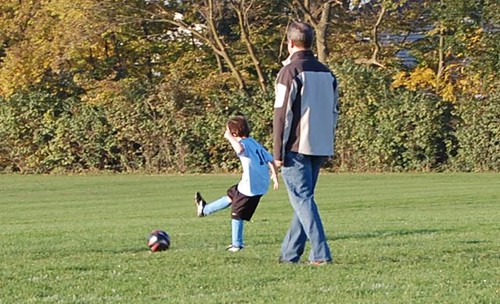 A second consideration around youth soccer is the investment that a person and family makes. There is travel time, practice time, game time, injuries, fees, uniforms, and equipment expenses – none of these may be overwhelming at first glance, but here is where the consideration of the family must take place. Our family values gathering around the dinner table and sharing a meal, talking about our day, being together – this is more difficult when you and your child are leaving the practice fields at 6:30 or later at night. While soccer might be something that an individual plays, it has an impact on more than just the individual and each family must evaluate the cost.
 Finally, and perhaps most grieving for me, from where I have been as chaplain for these many years, I have seen personally the devastation in people’s lives when they forsake God for the god of soccer. I have watched parents and players alike, become addicted to the drug of sport. And usually family life, church, and spiritual life are the casualties. The emphasis on the physical training and the physical pursuit of the sport trumps the spiritual. In the end, when soccer fails to produce what people so eagerly want to achieve, there are spiritual skeletons that limp through life. Now, this is not true of all parents and children who put their children into youth sports – but for those without regard or consideration for how youth sport impacts faith and family it is certainly a dangerous threat.

 The recent

 For example, one ancient act for demonstrating a covenant relationship was the exchange of coats. Here, two individuals would exchange their cloaks which were the symbol of their identity with a particular tribe or group of people. The dyes, colors, and patterns would have been common amongst those people and so when the two exchanged the cloaks it was a way to signify that each was accepting, embracing, adopting the identity of the other. It was a sign of solidarity, a sign of commitment. This is perhaps best illustrated by the exchange of jerseys that occurs after a match, but the supporters and fans also participate in this show of commitment. The wearing of team colors – whether shirts or scarves – are a way of trading their own, personal identity for the identity of the team.
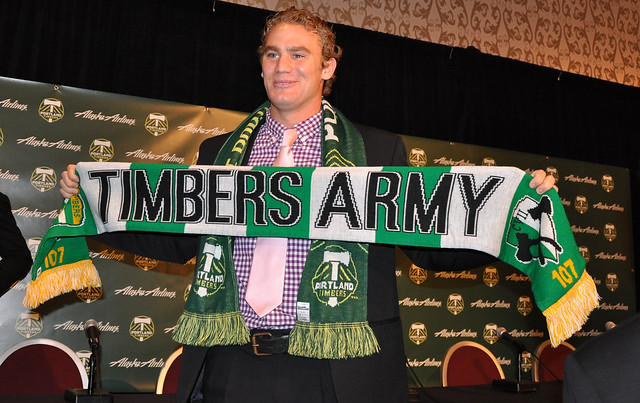 Another ancient tradition in covenantal relationship is the exchange of names. Here, an individual also takes on another identity. In ancient Hebrew tradition, the name for God was often added to the name of an individual who embraced or believed in God. For example, Abram becomes Abraham and Sarai becomes Sarah as they enter into covenant relationship with God. It is not uncommon to hear supporters in the stands declaring that they are part of the team, that they are one with the players that are out on the field. The scarf is an item that also becomes an adoption of a unique name that unifies individuals into a common people.
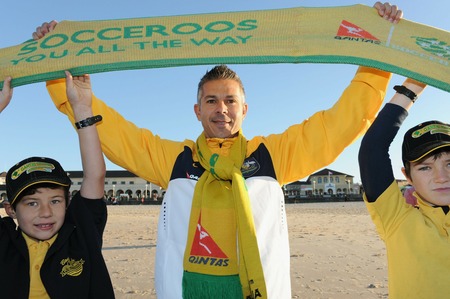 But perhaps the most telling ancient tradition that most closely represents the tradition of the scarf is the covenant cut. In ancient times, two people making a blood covenant, would make a cut on the wrist. They would then shake hands and let the blood co-mingle representing that two lives were becoming one. As time passed, the way that one would identify people of the covenant would be with the raise of the hand which revealed the scar. This is where the practice of waving the hand and exposing the wrist in greeting and also in oath-taking may have evolved from.
  Toronto FC, at one time one of Major League Soccer’s bright stars, has reached an embarrassing low. Starting the 2012 season with a league record of 0-8, the Toronto club has yet to get a win, or even a draw (tie), for any points on the season. The accompanying sense of frustration from the losing streak is one of the places where chaplains are often called to minister and speak into – sometimes with mixed results.
 No team likes to begin the season in a deep hole. And no team wants the dubious distinction of being one of the most ineffective or hapless teams of all time. Although, the Detroit Lions, at 0-16 in 2008 (the sum total of all league games for one season in the National Football League), will probably carry the distinction of being perhaps the worst team in modern sporting history for many years to come.
 So a typical question that people ask is, “Does God really care?” (about sports, results, wins, etc.). Serving as a chaplain for a professional sport team for over 10 years, I have wrestled with this question often. What has been helpful for me is the example from the life and ministry of Saint Patrick. He would enter into a village and share the Good News of Jesus, and during the week he (and his team) would go out with the villagers and pray over and bless the streams (to produce fish) and for the fields (to produce crops) and for the woods (to produce game). Patrick realized that in praying for “our daily bread” involves how food gets put on the table. For the athlete, this means having success in their work, in their profession.