
 In 11 seasons of serving as team chaplain, and three seasons in media relations with the Colorado Rapids, I feel like I have “seen it all.” In those years, there have been many highs and many lows, that I have had the sacred privilege and honor of observing and participating in. But, there is perhaps no greater place of tension as a chaplain than ministering to those who are “waiting in the wings.” Every professional team has them – those players who work tirelessly (sometimes even harder than the starters) to gain a starting position. And in no other sport is it more difficult to get a chance than for those who fill out the reserve squad for a football (soccer) team’s roster.
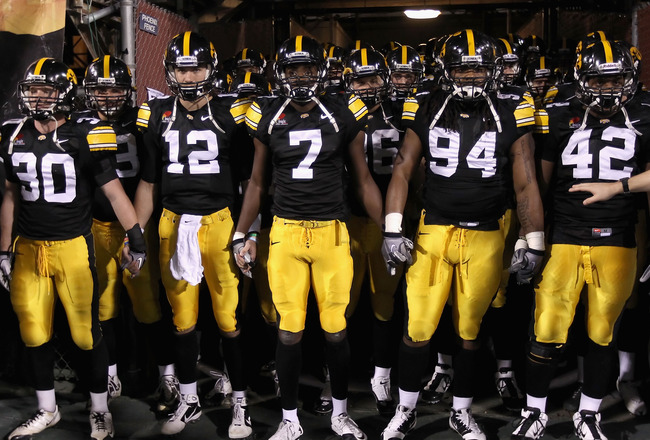 Consider this: a National Football League team has 53 players. There are 11 on the field at a time – and usually there is little duality of roles (i.e. offensive players and defensive players do not mix). The resulting 22 “starters” leave another 31 on the sidelines, but there tend to be many ways for players to have specific roles (special teams, etc.) with an NFL team and are still able to play and contribute. There is no limit to the number of substitutions that can be made during an NFL game- only to the amount of players (46) that can dress on game day. So potentially, there are seven players that may not see action on game day. Statistically speaking, 13% of your roster that you have to try and keep satisfied, motivated.
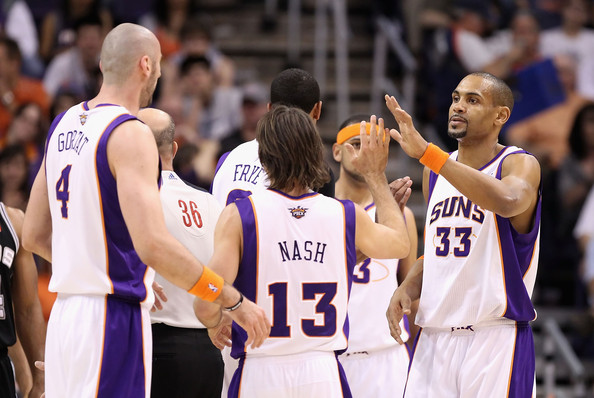 A National Basketball Association team can have 15 players signed and practicing with a team, but can only dress 12 for an NBA game. There are five players on the hardwood for a team at a time, unlimited substitutions and flexibility of roles within a team make for the chances of each player being able to get some time playing the professional game that they are passionate about. The three players that do not dress, equals 20% of a ‘roster’ though the NBA is similar to the NFL in that they often designate these players as “practice squad” players.
 The National Hockey League is similar to the NBA, but with more players on the roster. 23 players can be with the club, but 20 (18 skaters and 2 goaltenders) are dressed for gameday. The speed and pace of the game means that there are many substitutions (again, unlimited) and the 6 players (5 skaters and 1 goaltender) on the ice at a time allow for full participation of players in the game (coaching decisions, penalties, and situational circumstances aside). The three players excluded from game day represents 13% of the roster – again, keeping these players fit, motivated, and satisfied represent a challenge for the coaching staff.
 Major League Baseball has a different system. There are 25 players on an active roster (an additional 15 players are on an expanded roster which has injured players or farm team players). With 9 players on the field at a time (the American league has an additional player hitting for the pitcher) there are unlimited amount of substitutions that can be made, but there is a limit to this as many of the roles in baseball are situational. Teams carry different loads of positional player to pitcher ratios (usually 12 pitchers and 13 positional players on an active roster) but if we merely look at the game-day roster of 23 and assume that there are 13 position players that could be substituted for 8 positions (excluding the pitcher) this leaves 5 that may not see game time (not including situational pitchers). But the sheer number of games in MLB (162) means there is plenty of opportunity for players to play. So, roughly, 22% of a MLB team waits in the wings.
 Major League Soccer teams carry rosters of 30 (with some exceptions). Of this number, 18 dress for 11 positions on the pitch (field). However, competition rules limit the number of substitutions to 3 players. This means that in any given game (34 league games in a season) at most 14 players can compete. Games are timed (like in football, basketball, hockey) but there is no stoppage of the clock. 90 minutes for 14 players out of 30 means that more than half of your team is not seeing a minute of playing time (limited as it is) and among professional sports leagues, only the NFL has fewer games than MLS. 50% is a large number of individuals on a team to try and keep satisfied, motivated, and fit. And, so, when a player gets a chance in soccer, they have to make the most of it.
 As a chaplain, here is the rub – we support the players starters, subs, and reserves without reservation. But the competition and drive and desire to gain that position is a difficult place to minister. To encourage the younger player, to support the incumbent, to be received well by both can be one of the most challenging parts (if not the most) of my work. The fatal tendency for a chaplain can be to fall to one of two extremes: either gravitation toward the starters for their profile and fame or gravitation toward the reserves because of their openness and hunger for any and all support. There is a balance to be struck, I believe, but it is one of those heart-wrenching places for a chaplain because we want to see the team do well and individuals do well and succeed, too. And, so many times, I find myself saying an extra prayer for those “waiting in the wings,” that God would give them encouragement, strength, discipline, and patience.
Blessings,

Rev. Brad Kenney
 When David Beckham first stepped foot on American soil to play for Major League Soccer, there was a division of opinion. Some said Beckham was merely the latest in a long line of world-renown footballers, past their prime, looking to make a last stab at financial gain before retirement. There were other pundits who claimed that soccer had officially made it in America and that the Beckham brand would forever change the American landscape and attitude toward a sport with a sketchy history of attraction in the U.S.A. Now, five years later, the jury may still be out on many points of the argument but there is at least one thing (there are more) from this chaplains perspective that Beckham’s arrival did for Major League Soccer. I call it “The Beckham Affect.”
 Change #2 – Legitimacy – Beckham’s first few years were a mix of success and failure – at one point there was heavy criticism for the amount of money he was being paid for the number of minutes he was on the field and producing seemingly little results. However, last year’s MLS Cup Final win over Houston and Beckham’s subsequent return and renewed contract may have stemmed the tide of opinion against him. Beckham’s presence, though, did open the door for other, high-profile players to come and ply their trade in MLS. Although some still may view MLS as a pre-retirement destination, the league has grown in popularity and legitimacy in the years that Beckham has been in the league and looks to continue to grow in an upward trend.
 Change #3 – Money – Beckham is an oft-critisized personality. Some have made fun of his seemingly un-sharp comments at times, but he has a lot of respect in terms of his personal branding and marketing. MLS has benefitted from the Beckham brand – a healthy and in-form Beckham is sure to help the local team sell out for the LA Galaxy game when the Beckham show hits the road and this means people in the seats to see the world-famous star. General Managers like to have their stadiums fill to capacity.
 In the hours immediately following last April’s injury, Zakuani was at risk and needed surgery immediately to relieve pain and pressure from the break. I know many on the Sounders were holding their breath – this was their prized draftee and a promising young player; career, even life seemed to hang in the balance. Mullan had no idea of the extent of the injuries until the game was finished and he was heading home.
 For those that know Mullan, he’s a wily veteran with an extensive playing career, but ‘dirty player’ is not a title that would be used in the same sentence for one of two players in the league to have earned five championship rings. He joined the Rapids to help them win the coveted Major League Soccer Cup, and that he did in his first year with the club.
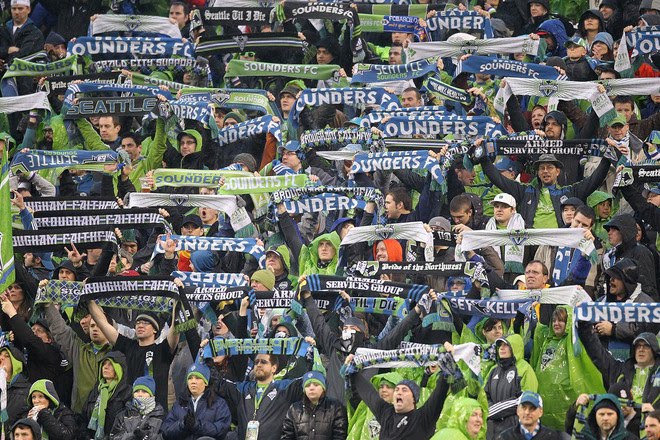
 Fast forward to today, the return trip to Seattle and one of the most difficult places to play in the league – but when 38,000 fans are ‘booing’ you every time you touch the ball, it can seem a lot more. I did feel that the fans were professional enough – any team will ‘boo’ the villan. I was wondering if there would be more pugilistic kinds of threats or danger toward Mullan, but it seems that the game went without incident in any sort of regard to that direction – although there will always be extreme fans
  Personally, though, there is some disappointment for me as the Rapids team chaplain. Perhaps I am too idealistic. Perhaps I am too romantic. Perhaps my desire for the beautiful, storybook ending just isn’t to be hoped for. I had imagined Brian Mullan walking over to Steve Zakuani at midfield, with the entire of Seattle watching as the two shook hands, hugged, and forgiveness and grace at center stage with tears and confetti while the Sounders faithful sang a new hymn of football reconciliation. But such things were not to be today – but maybe another day. We can only hope and pray.





 As a chaplain in professional sport, it is so disturbing to see athletes injured, and especially when one collapses or even suffers death in the midst of competition. Saturday’s incident where Fabrice Muamba of the Bolton Wanderers of the EPL (English Premier League) collapsed and suffered a heart attack during an FA Cup match, was one of those shaking moments for all – players, coaches, officials, and fans to see. As I reflect on the trauma (the match was abandoned) caused, I am reminded of the fragility of life and how much more pronounced that tenuous space feels when we watch one of the best fall – these are the ones who are in the prime of life, the peak of physical performance and conditioning – if they fall, then the hope that we often put in our physical fitness seems that much more diminishing and fleeting.

 I just wanted to share some personal reflections as the new Major League Soccer season is now underway. After 11 seasons as team chaplain for the Colorado Rapids, there has been a lot of things (as I look back) that have happened over the years – from injuries to players, to coaching changes, to championships, and everything in between. This week, CrossTraining will change a bit too – though mainly superficial, I can sense more change coming. We will, of course, change the website look and feel, but there is more – as I read back through the couple of years of stories and shared concerns, there is something that seems to be missing, and for me it is huge.