

We discover the shepherds of Advent in Luke 2:8-20. You will recall that Advent has to do with waiting; Advent has to do with living in expectancy. And, as the shepherds of Advent journey to the creche at Christmas their hearts are filled with awe and wonder. The shepherd’s story has long captured the imagination of many throughout the years – whether in church Christmas plays and dramas with young kids hitting each other with paper staffs or in the professionally-made films and productions with robed and burly-looking men playing the part. Who were these men, these boys (perhaps), who were visited by an angelic messenger, serenaded by a host of angels, and sent on their way to discover a baby in a manger? What special place do the shepherds hold in the heart of history and the nativity narrative? Why them? And who are the shepherds of Advent to us today?
 Who Were the Shepherds of Advent?

Simply put, the shepherds were quite low in society during ancient times. Their occupation of tending and guarding sheep was not highly sought after – it was a task usually reserved for single men who had no family, no children – no inheritance or future, to speak of. The task of shepherding also often fell to the youngest child in the family because that child would have so little share of any future family inheritance.
In addition to being childless and without an inheritance, shepherds would have generally been considered “unclean” (at least according to Jewish ceremonial law) by the nature of their work in the outdoors. Any incidental contact with a dead carcass of an animal, or certain bug and creatures would make shepherds need to undergo an extensive process of becoming physically and ceremonially clean, before being able to worship in the temple. This made the life of a shepherd incredibly lonely and isolated.
Some other characteristics of shepherds in contrast with farmers (who had better social and economic standing in ancient times). Shepherds usually were tenants – renting land from the farmers. Of course, with little or no power, the shepherds were at the mercy of the farmer who had land and wealth. The farmer could designate which land was for grazing (typically, it was land ill-suited for any real purpose of growing crops). The farmer could set the price and could ask the shepherds to leave at any time.
Shepherds, because of this, tended to be nomadic and migratory kinds of workers – they had to move constantly. Wherever they could find suitable land for grazing, they were constantly on the move (almost daily) to find grass for the sheep to graze on. This meant that shepherds had no homes to speak of – nothing stable, tents if they were lucky, but usually they were exposed to the elements with, literally, only the clothes on their backs as their earthly possession.
Shepherds also had to live off their flocks – bartering milk, cheese. Sometimes, if the shepherd didn’t own the flocks themselves, they had to make do with whatever could be gained. It was a constant work of finding the best deal. Looking for leftovers, fighting for their survival.
 Why the Message Meant so Much

The shepherds response to the angelic message might seem foreign to us today – especially, those of us in the West who have or come from affluence – what, with all the running around and hurrying off to see a baby in a manger. Most of us do not appreciate the challenge of being a shepherd. Most of us have not know the hard work, the instability, the fragility, the lack of a hope and future. But knowing the shepherds and how they lived life and the hardships they bore, maybe we can see a little bit more clearly why the angel’s message meant so much to them.
Today in the town of David a Savior has been born to you; he is the Messiah, the Lord. This will be a sign to you: You will find a baby wrapped in cloths and lying in a manger.
These men – marginalized, on the fringe of society, with no hope of future inheritance (monetarily) or legacy (lineage and line); to these men is born. Those two words change everything. Those two words mean the world. Those two words turn the hopeless, futureless occupation upside-down. This is why the town of Bethlehem is besieged by the racing shepherds who practically invade a sleepy village and raise a ruckus with a joyous story rising among them.
The Shepherds of Advent and Professional Sports
Of course, as a chaplain to a professional sports team, I often reflect on the biblical narrative amongst the context of ministry where I find myself – what does a shepherd’s journey have to do with professional athletes?

For Greg Dalby (former Colorado Rapids midfielder) the professional soccer journey was often lonely and full of many transitions.
Forgive me if you feel that some of my pondering is a stretch, but consider for a moment:
- Many in professional sports are constantly tenants, migratory moving from city to city and team to team
- Many in professional sports have failed or failing marriages and families – often leaving many single
- Many in professional sports, while earning a range of money* make poor financial decisions and sometimes are left with bankruptcy and in poverty
- Many in professional sports, because of their jobs are excluded from typical communities of worship by virtue of the days and times that they play and perform
- Many in professional sports lack a moral or spiritual hope or future because there is such an emphasis and pressure on physical performance and results
- Many in professional sports have followers and fans that listen to their voice and hang upon every action and activity of their “shepherd” but often feel alone
*Major League Soccer’s minimum salary is $36,500; view this visual comparison chart to see a breakdown of MLS salaries from 2014 based on teams and individual players.
While on the outside, those in professional sports may not seem to be the shepherds of our day, there are similarities within their lives and stories to the ways in which the shepherds live. It is to these similarities that, as a team chaplain, we must sometimes speak.
Chaplain to the Shepherds of Advent?
As a chaplain, the historical charge and commission of our vocation, necessitates that we serve as messengers of hope – much like that angel of the Lord that appeared in the middle of the night to the shepherds of Advent. As guardians of that which is sacred, we remind those that we come in contact with – that we:
bring…good news that will cause great joy for all the people. Today in the town of David a Savior has been born to you; he is the Messiah, the Lord.
And somewhere, in the shadow side of all the “glory” of being in professional sport – where the hurt and pain and loneliness are like 10-foot giants in a land threatening to destroy these people – there is a dawning of a new day. There is a glimpse of a distant, yet, expanding light that promises something true, a future, against the oppressive cold of night.
As a chaplain to those in professional sports – whether it is working with the athletes, coaches, executive staff, or even the fans – we are always encountering people that are in a state of expectancy and anticipation. Much like Advent, they are waiting fro something to happen – a championship, a new contract, a skilled player or coach acquisition. Always waiting, always hoping – but nothing satisfies. Sometimes there is a great message or “good news” for the club but it doesn’t have that eternal quality or value that the message did on that night some 2000 years ago. As a chaplain, we carry that message. As a chaplain we re-present that message. As a chaplain we give that message away – daily – whether silently through our service or in other ways through our words, our counsel, or our love.
Whatever field or vocation you find yourself in, if you are a Christ-follower, if you have bent the knee at the Christmas creche, then you, too, have a duty to go and share the Good News – to share this message of hope to the marginalized, to the futureless. If you have lived, at all, a fraction of that nomadic, tenant-like shepherds of Advent life, then you know what I am talking about.
Let’s hike up our robes, and go tell some other people.
Blessings

Rev. Brad Kenney


 perhaps an indicator that there is something not quite right here. A few weeks ago,
 We are currently in the season of the year, known to Christians as Advent. Advent precedes Christmas and in earlier years it was celebrated as the 40 days before Christmas. Now, the season is typically observed beginning the four Sundays before Christmas. But the meaning of Advent has remained the same throughout the years – it is a time of preparation for the coming of the King. Perhaps, the theme phrase of the season can best be summed in the words of John the Baptist as he echoes the ancient prophet Isaiah,


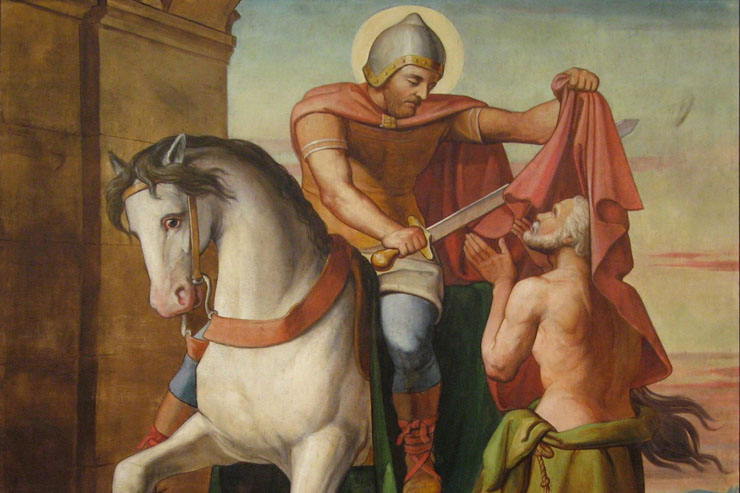
 As I continue in this work of serving as a chaplain in the world of sport, there are many times of “sharing the cloak” with a person in need – sometimes it was in leading a funeral service, other times in offering a listening ear, some times in simply being with someone in the midst of their pain.



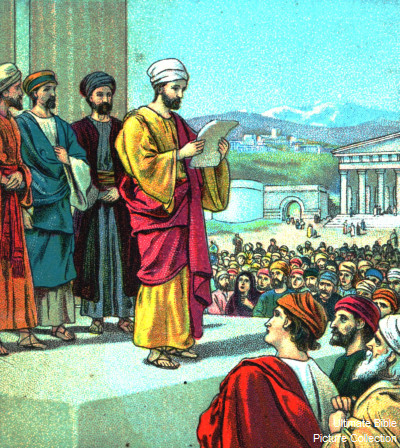 During seminary, I recall a particular moment when I was contemplating what future ministry would look like: one scenario, meant fundraising for salary and ministry to work with the Colorado Rapids as chaplain; the other scenario, meant working and doing the chaplaincy within the “margins” of life and work. As I relayed my fear and aversion of trying to raise money to my best friend, he simply said, “Oh, you must be an Ezra.” His statement caught me off-guard and I begged an elaboration. He proceeded to share that in looking at different personality types, it had been helpful for him to compare the contemporaries of Ezra and Nehemiah. Both men of God, they both made a return to Jerusalem in different ways. Nehemiah went and asked the king, Ezra was simply sent. Thinking I had discovered myself, I proclaimed, “Yep, that’s me, Ezra. Just send me, Lord!” However, my friend didn’t let me off so easy – sometimes within ministry we need to be like Ezra and sometimes we need to be like Nehemiah. But I don’t like the whole asking-for-money thing, I explained to my friend. It doesn’t matter, if God lays something on your heart…
 Today, I have come to know that part of God’s call on my life has been the ministry that serves as CrossTraining. Direct chaplaincy ministry to the Colorado Rapids of Major League Soccer and an indirect, yet continuing ministry to hundreds of alumni that are now scattered around the globe for me this community are the “returned exiles” that I weep for and am heartbroken for before God, much like what is described in
 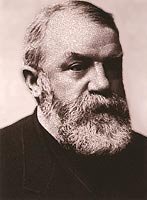 The evangelist, D.L. Moody once said, “Character is what you are in the dark.” Who are we when no one is looking? Who are we when no one is around? Perhaps, for the professional athlete, this question seems irrelevant – much of the professional life is spent in front of cameras, events and comments are captured by smartphones, minutia is tweeted, facebooked, instagrammed and more. Is there any dark in an athletes’ life? Is there any moment when the crowds or coaches, family or friends aren’t watching?
 Through the course of my life’s work, there have been many moments in which I have been confronted with death. Perhaps this has made me more melancholy as I age; however, there is for me a realization that many of these places – difficult as they may be, are sacred spaces or “thin places” as the Celtic people use to call them. Thin places were those places where heaven and earth seemed to touch – there is a solemnity to many of these moments and sometimes there is a strange sense of relief, even joy for those that are present when someone they love dies.