

Dallas native and Colorado Rapids captain Drew Moor can’t head his team past Dallas in the latest Rapids loss.
The Colorado Rapids latest loss on Saturday meant the longest slump of the season with three losses in the last three games, and only one win in the last seven. While not the longest losing streak in recent times (a six game stretch during 2012), it comes at a difficult point in time for the team during this season with many difficult opponents yet to play. Slumps are not uncommon in sports – every athlete in every sport can slump at any time and sometimes it is difficult to get back into a winning or successful rhythm. Many athletes and organizations put a lot of time, money, research, and energy into overcoming the droughts that come in performance-oriented environments.
But slumps don’t just happen in sports. Slumps happen in other aspects of our lives, too. Whether it is in a career, a marriage, mid-life, or even our own faith – we all fall into those places where we find success difficult and we are filled with fear, doubt, depression, or worse. What does one do in those moments when there seems to be no relief? What ought we do when we go through those seasons of drought in our lives – whether we have a losing streak or just, plain seem to be playing the role of loser?
The Bible is replete with many examples of “slumps” or droughts that people go through – some literal (periods where the rain just doesn’t fall) and some more metaphorical (related to faith and belief). Below are couple of ways that we can respond to the slumping moments of life that we go through.
1. Help for Unbelief – One of my favorite stories in the Bible is when a father comes to Jesus and cries out, begging him to help heal his child. Jesus asks the father, “Do you believe?” To which the father responds, “I do believe, but help my overcome my unbelief!” (Mark 9:14-29). What I love about this particular story is the brutal honesty of the father – he realizes the limitations of his own ability to believe. There are many in our world who make a lot of money writing “self-help” books and developing personal psychology which encourage people to believe in themselves and to “dig deeper,” etc. When was the last time that you heard any of them acknowledge the spaces of unbelief that one has in life?
I know, personally, that for me in the greatest moments of unbelief and doubt that I have needed to rely on my faith in Jesus Christ to see me through those difficult moments.
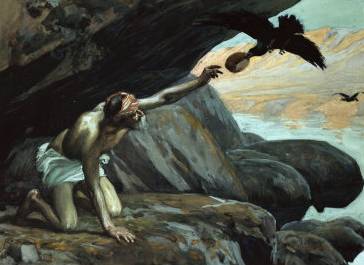 2. Rest in the Midst of the Drought – The story of the prophet Elijah features a major drought and famine in the land. There is time when Elijah, hiding and on the run during the drought, was fed by the Lord by ravens (I Kings 17) and another time at the end of the drought period (I Kings 19) when an angel of the Lord cared for Elijah who was at the point of utter desperation. The vitally important reminder is that there are periods when we cannot go on in and of ourselves and we need to be cared for by others – especially in our faith. We need to receive Divine “assistance” and sometimes a direct touch from the Lord. Many times in the midst of the drought and slump as people we tend to try and “push through” or we change routines over and over until we can rediscover or find that rhythm or success. We fail, though, to rest in those periods and to realize the benefits of resting in the midst of the slumps of life.
During a period of unemployment after graduate school, I remember learning about my own need for rest. I was working hard several hours a day – resumes, job applications, online database searches, meetings, interviews – nothing seemed to be working. I was worn out – emotionally and spiritually, in many ways. I started to segment the time that I spent in the job pursuit and the time I spent with my daughter at home. I rediscovered creativity and life in those moments of “rest” from the job hunt.
3. Companionship on the road – The Bible has many stories of the beauty and strength of companionship. Ecclesiastes chapter 4, relates it this way:
9 Two are better than one, because they have a good return for their labor: 10 If either of them falls down, one can help the other up. But pity anyone who falls and has no one to help them up. 11 Also, if two lie down together, they will keep warm. But how can one keep warm alone? 12 Though one may be overpowered, two can defend themselves. A cord of three strands is not quickly broken.
Ruth and Naomi, David and Jonathan, the two disciples on the road to Emmaus, Elijah and Elisha – there are many examples of God providing special companionship for difficult roads and trials, seasons of pain and drought.
In my life, God has always managed to bring a close companion for the road that I needed to walk – whether through my school years or in ministry, I have shared a special bond with another person. They have been there to help encourage and lift me up while going through those “summer slumps.” They help reorient me and help me to see things from a bigger picture – that God isn’t finished with me and that I am not alone.
While just a few ways of coping with the slumps of life, I believe the above to be some of the best ways that God gives us help. I pray that if you are going through your own slump that you will lean upon the Lord. Trust him. Cry out to him. He knows you’re need and he will provide. May God get you through the “summer slumps” that you encounter in life.
Blessings,

Rev. Brad Kenney


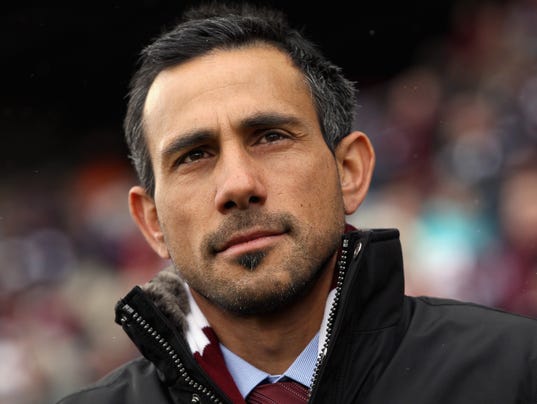 At the most recent Colorado Rapids home game, the club recognized the 5th member of the Gallery of Honor, current coach and former player Pablo Mastroeni. As a player, Mastroeni was the Rapids’
 God is calling you and me, to be part of this Hall of Fame, this Gallery of Honor. To be people who, filled with faith, live out our lives with distinction – it matters not what earthly accomplishments or achievements that we earn, it matters little what recognition or fame we earn. What matters is that we live out our faith and trust in God – through good and bad times, through times of success and times of failure because God is planning something better for us. He is planning something that, together, will see us perfected and champions for eternity.
 I meet many men who tell me, “I don’t sing.” Many of these men are speaking from a church context and about modern worship styles and trends
  Pope Francis
  There is perhaps no larger stage for a single sport sporting event than the World Cup – the National Football League’s Super Bowl ranks high on the list with a large American viewer base and the Olympic Games also have a broad global appeal, but in terms of reach – there is no comparing to an event like the World Cup where, literally, the world is watching (some
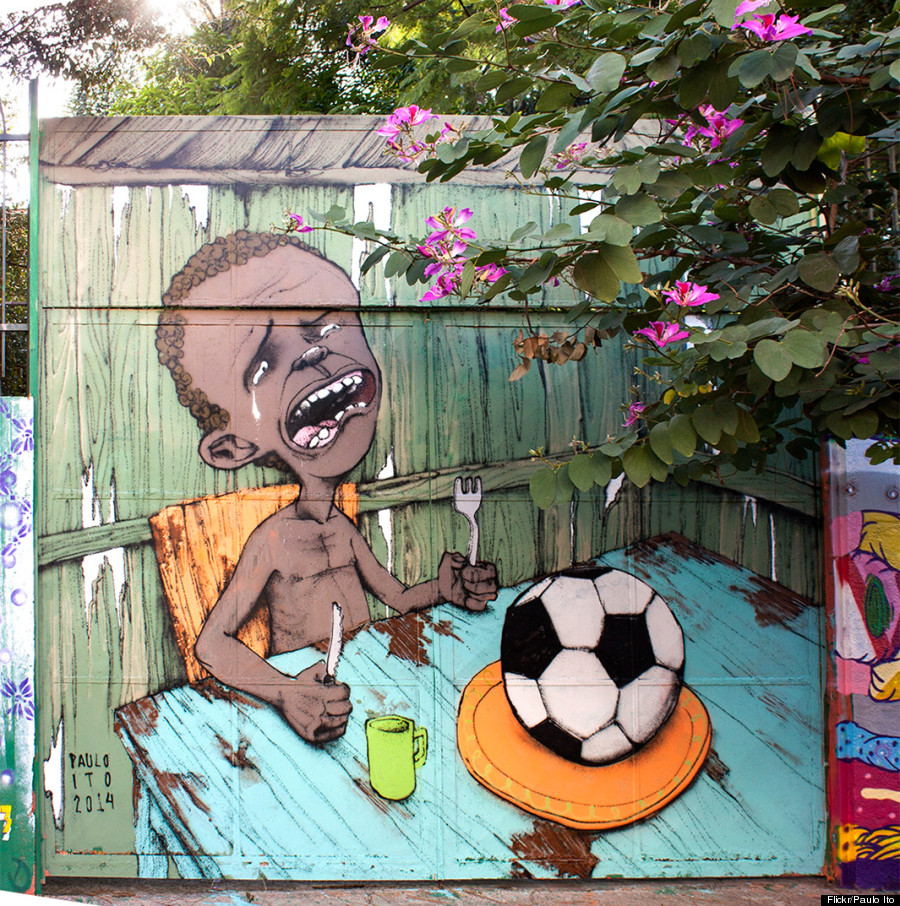 Is the world seeing the poverty and social justice issues that are seemingly “behind the scenes” in Brazil? Brazilian street artist
  attention to the larger issues of human exploitation it can often seem that these voices are lost in the deafening roar of the fans of the “beautiful game.” References to “Jesus” saving at the World Cup are little more than
 The imperative for us who follow Christ is to reach out and love as Christ would love, and while expressions of one’s faith and life might well include printed expressions such as Kaka’s (Real Madrid) or Wells Thompson’s (pictured while playing for the Colorado Rapids), our faith needs to go beyond mere words.
  The faith of one who follows Jesus Christ is an active one – where the actions and beliefs are lived out in very tangible ways. Thankfully, both Kaka and Thompson are men who live out an active faith – giving of their time, talents, and resources to love others as Jesus would. Their lives serve as an example for those of us who love and follow the beautiful game – realizing that it is a game, and that there are larger, more important issues at stake. In the least, it should make each of us consider, what is the world seeing when they are watching – whether it is a large event like the World Cup or the way that we live out our faith at home, at work, or at play. We are called to pay attention – not to the star-studded, dramatic happenings on the pitch, but the darker, more desperate issues behind it.

 The growth of fantasy sports is changing the landscape for the professional sports fan – the game that is much loved (whether soccer, basketball, baseball, or something else) or followed can now have a different level of interaction and control for the fan. Choose players, select which ones play at a certain time, spend a certain allocation of money to develop a team, win prizes, win money – all of these possibilities are creating a new type of fan; a fanatical, fantastical fan.
 Now, as you read this, if you are in an age group of Generation X or higher, you might be thinking, “Fantasy sports, that’s ridiculous…” But a recent story highlighted just how much fantasy is changing the landscape, not just of the fan, but of the economy. For example, this
 A friend recently lost his job. Terminated without any warning, he expressed shock and dismay when the company that he had worked for over 8 years told him, “We’re going in a different direction.” Box in hand, he cleared out his desk and made his way home – bewildered and confused while coworkers looked on. Whilst we don’t often consider it in this way – a death had occurred. Relationships, pay, significance, identity, and much more all were “killed” in that particular moment for my friend and he had to cope with a great sense of loss that was compounded by the whole thing being confusing and unforeseen.
 Losses like this are commonplace in life and also in professional sport – being traded or cut, a career-ending injury, or a personal trauma all represent a type of “death” that one can experience in the course of one’s professional career. In the midst of the dying process, as human beings, we search for redemptive and hope-filled moments – we await the next offer or opportunity, we hope for change or something different to come along.
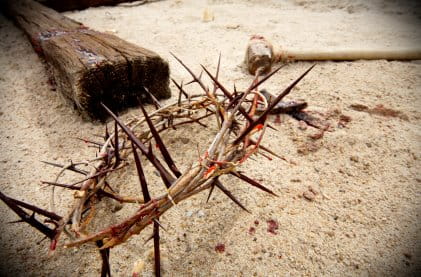 When that new thing does come along it is almost like experiencing a “resurrection” of the soul. The sun shines clearer, we can see purpose in our situation, we are filled with a new found sense of hope. This Easter Sunday, as Christians, we reflect on the Ultimate Death and Life in Jesus Christ. The brutality of Friday’s crucifixion and the death – of Christ, and seemingly of so many others things (relationships, hopes and dreams) that occurred was heavy. Perhaps the heaviest time ever in the span of history, but Sunday was coming.
 No matter where you are right now – whether approaching a seeming death, in the throes of pain and suffering, or just plain “dead” – you can have life again. Cry out to God – he has not abandoned you or I. He has the power to raise dead things to new life again. And he will do it – for you and for me.

 First, making a distinction between superstition and rhythms can be helpful. There are some things that players, coaches, or teams out of superstition and there are other things that a team does in order to develop a rhythm or pattern. For example, warming up before a game with exercises and drills is more of a pattern than a superstition and a way of preparing the body for the task. In a similar way, an individual player may have their own pattern of preparing for a game – from taking a nap, to reading, to even praying. Sometimes, a rhythmic action can become superstitious (for example, a player who prays before a game having success and then determining that the prayer is what made him successful). This is an area where a chaplain must provide clarity and insight.


 But regardless of the athlete and the environment of academics that they come from, one of the roles of the chaplain in professional sport is
  If helpful at a collegiate level, you can imagine how much more helpful at a professional level. I am coming to realize more and more, that some of my work as a chaplain is to help the young men that I work with to become more solid in life and not just in academics, but in life and faith. Part of my role is helping them in the process of going from boyhood to manhood. Helping them to become real men – men of integrity, men of faith, men of honor, men of valor – men that are not, paper thin.