
 Key themes for the Advent season include expectancy and expectations. Mario Albertinelli’s The Visitation captures the one and leads us to reflect on the other. As you observe Mary and Elizabeth, in this poignant depiction of the narrative found in Luke 1 – perhaps you can anticipate the senses of expectancy and expectation that both women carry.
Reflections on Mary and Elizabeth
Consider, that both women are pregnant for the first time – Mary in her young age as a virgin and Elizabeth in her old age as one who has been barren. Both women have been divinely told that they will have sons. Both women have been given a glimpse of their son’s future. Both women are alone – Mary is not married to Joseph and has not been with a man; Elizabeth, while she made love to Zechariah, he has been a mute ever since returning from the temple. Both women now live with an eye of scandal cast about them – Mary because she is a virgin and was betrothed to Joseph is seen as an unfaithful whore and Elizabeth has born the shame of childlessness for so many years, it is unclear the present condition of shame, but either past or present she has lived with much shame for so long.
As the children grow in side the wombs of these mothers to be – this is an entirely new experience for both – there is sickness, discomfort, feelings of hope and elation, there is perhaps disappointment, and of course, there is an element of shame and feeling alone. Both women are expectant. Both carry expectations. We see, only briefly, each women’s response to what they carry within.
As I reflected this past week on both women’s circumstances, attitudes and responses I was encouraged by another person to consider the importance of living in the expectancy and not the expectations. As I considered his direction, my eyes were illuminated – it can be very dangerous as human beings to live in the expectation. As Christians, we must necessarily live with a sense of expectancy – this is part and parcel of our faith and our hope. When I live with expectancy, I am waiting for something to happen – there is a level of preparedness and readiness. When I live in the expectations, the danger becomes that I can become consumed with or disappointed by or depressed when the expectations are not met or are met in an entirely different way.
Consider, again, Mary and Elizabeth – in their day, women did not know whether a child was a boy or a girl. They had to wait – 9 months, before that truth be made known. In those days, male children were valued above girls for many reasons – including having a legacy or leaving an inheritance. Can you imagine the disappointment for a childless woman who gave birth to a daughter instead of the hoped for son? Living deep within the expectation of having a son, closes off the joy and beauty of simply being blessed with a child. I know this for myself, as for the birth of one of our daughters we didn’t find out the gender before she was born. I was hopeful, eager to find out, “Will it be a boy?” And, I felt sheepishly guilty when I discovered that it was not a boy. I felt guilty because I had gotten too caught up in thinking it might be my first son and I feel that I missed something.
Reflections on Major League Soccer
This past week in Major League Soccer, there was a lot of movement and action. A short trade window, an Expansion Draft to help two new teams coming into the league fill out their rosters, another trade window, another draft to allow teams to sign players that had been released from other teams, another draft to allow teams to sign out of contract players – for many players and their families there was a great sense of expectancy and expectation.
 Of course, the experts around these times often postulate what will happen and to whom. Such as in this mock draft done by league writers and experts Andrew Wiebe and Matt Doyle for the MLS Expansion Draft. Of course, the real draft results didn’t quite match up to the expert ideas, but there were some players that knew that they were in mix for consideration and perhaps even began to develop their own “expectations.” Consider former Real Salt Lake’s Chris Wingert (whom also played for the Colorado Rapids for two seasons) – even in the midst of the opportunity to go home to native New York, the loss of being with the club and players he has spent a majority of time and won a championship was also difficult.
Back to Mary, for a minute, what were her expectations? There were many as she pondered and puzzled perhaps over the Christ-child being born to her. There were angelic messengers, there were strange prophecies including one who said “A sword will pierce your own soul” (not exactly what a new mother wants to hear about her child), a midnight leaving and fleeing in the night to a foreign country, moving here and there, losing her child in a major city, being rejected by her own son when he was older – and many other events in the life of Jesus – all culminating in Mary standing before a Roman cross with her naked son exposed for all the world to see and dying the death of a criminal. In that moment – had Mary been living in the “expectation” rather than in “expectancy” I believe that she would have been destroyed (reference Judas whose expectations of Messiah were not met and he killed himself).
Back to the athletes that we work with at CrossTraining – so many of them live in the expectation. As athletes and coaches, and staff in an entertainment environment where results matter and the is a constant pressure to perform and achieve and win – it is difficult to not get trapped in living in expectation. Whatever the end-goal is – whether making the playoffs or defeating an opponent or player development – expectation rules. While sometimes language of expectancy bubbles to the surface, “We are in a rebuilding process…” it is rare to find those in our sphere of ministry that understand and value life with expectancy.
Just Business?
It might be said that this is business – expectations and demands rule the day, here. But what often happens is that the expectation blurs into life and character. The rash of professional and collegiate athletes committing suicide is  perhaps an indicator that there is something not quite right here. A few weeks ago, MLS Senior Editor Nick Firchau wrote an extensive article on the issue of mental health amongst athletes in MLS and Landon Donovan’s legacy. Much was spoken about the need for psychologists and therapists to help athletes cope with the mounting pressures. But nary a word was spoken about team chaplains or chaplaincy around the league. This might be understood in a couple different ways, either Firchau isn’t familiar with the presence of chaplains (and thus, didn’t include them in his interview or research) or the effectiveness of our presence is limited.
True, there are different types of chaplains around the league – some are trained chaplains, some are evangelists, others are pastors who volunteer their time – but the message that we carry, that we must carry to those we work with must be about living in the expectancy.
What Does Living in Expectancy Look Like?
 With expectancy, I do not get caught up so much in the details (i.e. expectations) rather, I ready myself for something much more simple – that something is about to happen. Many times as a chaplain when I drive into the training ground, I do not know what to expect for the day. I often use the Celtic/Latin term peregrinate to describe this way of living and moving. To capture this essence, an illustration: Celtic monks used to travel by boat to different villages. Peregrinatio was a form in which they would travel understanding that their journey was Divinely-led. The monks would push off from shore, but then pull in the oars and let the wind, waves, and tide take them to their destination. They would pray that God would lead them to the village or people that they needed to minister to that day. They were expectant that God would lead them to the right place, at the right time and would provide for all they needed (wisdom, strength, patience, etc.). When they arrived at the place that they felt God had led them – they would get onto shore and begin to minister and work and live amongst the people – all the while realizing that they had been prepared by their time in the boat.
As a chaplain and as a pastor at a mega-church, much of my role is about leading people into understanding the differences between expectation and expectancy and encouraging them to live in the latter. Even for myself, as I lead this ministry of CrossTraining, it is hard not to get caught up in the expectations. But God is calling us to live in the place of expectancy where we leave the details up to Him. If He should choose to work in a particular manner, that is what I must surrender to Him. If He should choose, even, to not use me – I must be okay with that and surrender that to Him. When we do that, when we let go of the expectations and live in expectancy we can take greater joy in the journey. We can see the wonderful way that God is shaping and forming His kingdom. And we can celebrate the arrival that we have been waiting a life-time for.
Blessings

Rev. Brad Kenney
 We are currently in the season of the year, known to Christians as Advent. Advent precedes Christmas and in earlier years it was celebrated as the 40 days before Christmas. Now, the season is typically observed beginning the four Sundays before Christmas. But the meaning of Advent has remained the same throughout the years – it is a time of preparation for the coming of the King. Perhaps, the theme phrase of the season can best be summed in the words of John the Baptist as he echoes the ancient prophet Isaiah,



 As I continue in this work of serving as a chaplain in the world of sport, there are many times of “sharing the cloak” with a person in need – sometimes it was in leading a funeral service, other times in offering a listening ear, some times in simply being with someone in the midst of their pain.



 During seminary, I recall a particular moment when I was contemplating what future ministry would look like: one scenario, meant fundraising for salary and ministry to work with the Colorado Rapids as chaplain; the other scenario, meant working and doing the chaplaincy within the “margins” of life and work. As I relayed my fear and aversion of trying to raise money to my best friend, he simply said, “Oh, you must be an Ezra.” His statement caught me off-guard and I begged an elaboration. He proceeded to share that in looking at different personality types, it had been helpful for him to compare the contemporaries of Ezra and Nehemiah. Both men of God, they both made a return to Jerusalem in different ways. Nehemiah went and asked the king, Ezra was simply sent. Thinking I had discovered myself, I proclaimed, “Yep, that’s me, Ezra. Just send me, Lord!” However, my friend didn’t let me off so easy – sometimes within ministry we need to be like Ezra and sometimes we need to be like Nehemiah. But I don’t like the whole asking-for-money thing, I explained to my friend. It doesn’t matter, if God lays something on your heart…
 Today, I have come to know that part of God’s call on my life has been the ministry that serves as CrossTraining. Direct chaplaincy ministry to the Colorado Rapids of Major League Soccer and an indirect, yet continuing ministry to hundreds of alumni that are now scattered around the globe for me this community are the “returned exiles” that I weep for and am heartbroken for before God, much like what is described in
 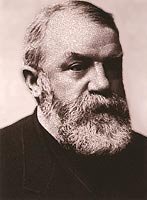 The evangelist, D.L. Moody once said, “Character is what you are in the dark.” Who are we when no one is looking? Who are we when no one is around? Perhaps, for the professional athlete, this question seems irrelevant – much of the professional life is spent in front of cameras, events and comments are captured by smartphones, minutia is tweeted, facebooked, instagrammed and more. Is there any dark in an athletes’ life? Is there any moment when the crowds or coaches, family or friends aren’t watching?
 Through the course of my life’s work, there have been many moments in which I have been confronted with death. Perhaps this has made me more melancholy as I age; however, there is for me a realization that many of these places – difficult as they may be, are sacred spaces or “thin places” as the Celtic people use to call them. Thin places were those places where heaven and earth seemed to touch – there is a solemnity to many of these moments and sometimes there is a strange sense of relief, even joy for those that are present when someone they love dies.