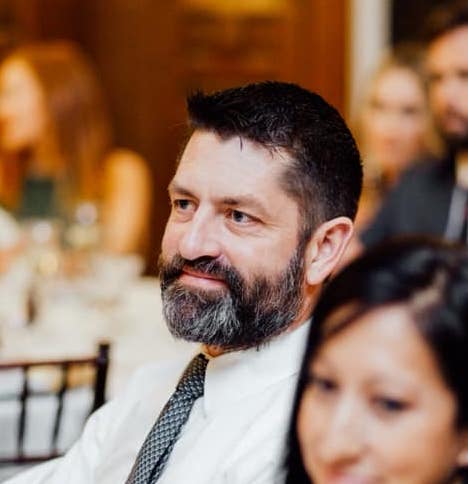
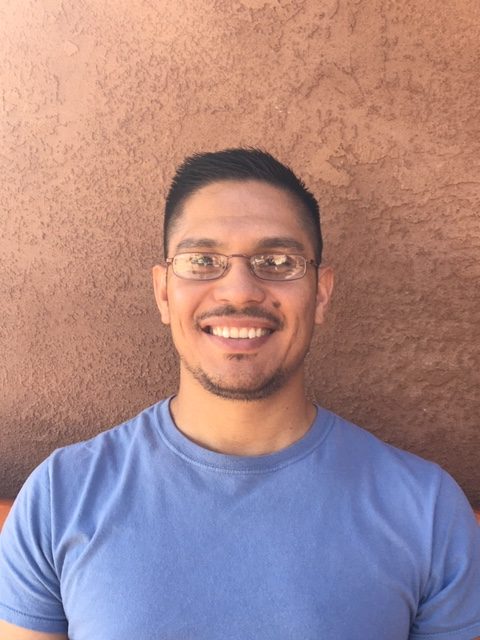
I am excited to announce that with the United Soccer League—Championship kicking off this past weekend, Erick Jiménez, has moved through the candidacy process with Soccer Chaplains United and will now be appointed to serve as volunteer chaplain to El Paso Locomotive FC.
Erick is the Pastoral Director of Young Marrieds and Family at Coronado Baptist Church and is currently working on his Master of Divinity degree from Southwestern Baptist Theological Seminary. You can read more about him on his bio page here.
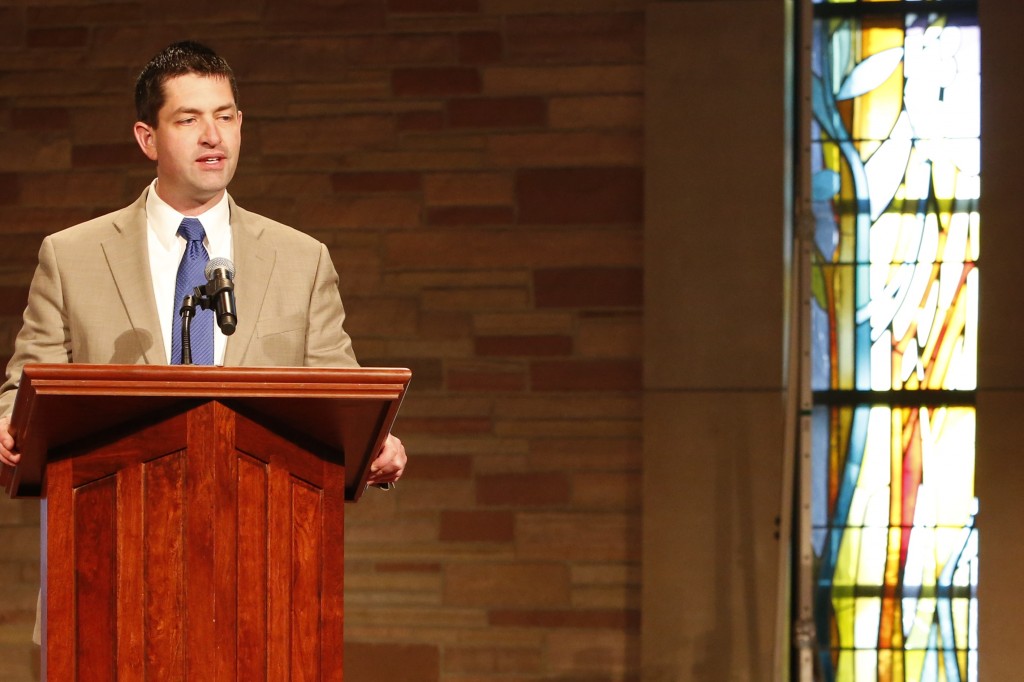
Erick Jimenez will become El Paso Locomotive’s first volunteer chaplain
During the time of COVID-19, chaplaincy placement conversations have been extremely difficult as different teams and organizations bide their time to see how the global pandemic will impact the sports industry — across all levels. However, the appointment of Erick as chaplain comes at an important time as many of the USL athletes have been waiting and training in their team markets. With the recent collective bargaining agreement and other adaptations to the league play this year, many athletes have been isolated, even from teammates and waiting to see if soccer would happen at all this year.
After a month long dialogue, and a few weeks of searching for viable candidates in the El Paso area, God made Erick’s candidacy clear. For Erick, the timing was something he and his wife could see God working in,
For awhile I have been removed from sports ministry and my wife and I before COVID-19 had been talking about getting back into some form of ministry utilizing sport. And then I get this random call. I was thinking ‘This was crazy!” I had been wondering if our teams in El Paso had chaplains and then this call and the process, and I am seeing how God is working through this.
Erick Jimenez, on receiving a random phone call about the chaplaincy opportunity
Erick’s appointment as chaplain becomes Soccer Chaplains United’s fourth USL – Championship chaplain and 14th chaplain overall.
Soccer Chaplains United is non-profit, 501(c)3 and depends upon the financial support of our partners to carry out our work of developing chaplaincy, counseling, and community service across all levels of soccer. Please consider making a contribution today to help us continue growing our work. Simply click the PushPay (the big P) link below to make a secure, online, tax-deductible gift, or mail a donation to Soccer Chaplains United, PO Box 102081, Denver, CO 80250.
https://soccerchaplainsunited.org/wp-content/uploads/2020/07/image.png338600Brad Kenney/wp-content/uploads/2022/11/SCU_Seal_Logo-300x300.pngBrad Kenney2020-07-13 10:00:002020-07-14 10:38:17Announcing El Paso Chaplaincy Placement
Today, I had the privilege of presenting two sessions on sports chaplaincy to about thirty men and women interested in or whom are currently serving as sports chaplains in the country of India.
In the first session, I presented an expanded presentation of a Biblical Foundation for Sports Chaplaincy along the lines of last year’s presentation at Calvin University in Michigan. It was at the 2nd Global Congress on Sport and Christianity, where I met with delegates from India who invited me to conduct today’s training. With about 40 minutes, I was able to expand further into the study of Genesis 3 as the biblical foundation for the work of chaplaincy in sport and provide examples and illustrates along the way.
A short break and intermission allowed for us to dive into a second session, whereby I presented a reformatted version of a teaching from 2016 in which we looked at the four foundational elements of pastoral care as a framework for how one might take on the role of chaplain. The second session featured more around passages in the New Testament and a brief discussion of Saint Martin of Tours and the origins of chaplaincy. Our time flew by, but I encouraged the attendees to go away with the teaching and reflect on the Parable of the Good Samaritan.
Prior to Coronavirus, initials talks had been in place to do some form of training for soccer chaplains in India and the global pandemic and the uptick in utilizing video conferencing resources has opened some new doors and ways of thinking of how we take on different training and educational opportunities.
I look forward to seeing further opportunities open up for us and for Soccer Chaplains United!
https://soccerchaplainsunited.org/wp-content/uploads/2017/07/india-flag-1280x768-(1).jpg7281280Brad Kenney/wp-content/uploads/2022/11/SCU_Seal_Logo-300x300.pngBrad Kenney2020-05-29 15:00:562020-05-29 14:53:17Breaking New Ground
I am pleased to announce that Soccer Chaplains United will be part of the Denver Prays time happening this upcoming weekend. The Denver Prays movement is a 3-Day Christian virtual prayer meeting stretching from Friday, April 24, 12:01 AM to Sunday, April 26 Midnight. The aim is to pray for the city of Denver during the COVID-19 pandemic and just as the city gets set to loosen its social distancing and shelter-in-place restrictions. You can go to denverprays.com to learn more or to sign up.
Rubèn will lead a prayer hour at 1:00 pm (Mountain) this Sunday.
Pastor Rubèn Rodríguez will be leading a Zoom prayer time on Sunday, April 26 at 1:00 pm Mountain. His prayer topic is specifically for Denver Youth, a fitting subject given his many years as a youth pastor and currently as the Colorado Rapids Development Academy chaplain.
I will be leading a Zoom prayer time on Sunday, April 26 at 2:00 pmMountain in consideration of a typical sports event kickoff time. If you are someone in sport who has been effected by the current global pandemic.
I will be leading a prayer hour at 2:00 pm (Mountain) on Sunday.
I will be leading this prayer hour for those in the sport industry (from youth to professional) that have been effected by the Coronavirus pandemic. Many have certainly considered that there are no sports going on, but we may not have thought of the different people and their lives impacted economically through this time.
Perhaps the first image that comes to mind is the multi-million dollar athlete or owner — they should be fine financially, right? But we forget about the part-time stadium guard who is retired and needs the extra income to make ends meet. We forget about the local businesses near the stadiums that depend on heavy traffic flows to help their monthly revenues. We forget about the front-office and ticket sales staff who are facing furlough, lay-offs, and firings because they don’t have events that they are selling, promoting, or working. We forget about the Olympic athlete and the collegiate athletes — whose scholarships, livelihood, and other parts of their lives have been impacted.
In addition, the realities of the income of sport also include those that play at lower levels. The median salary of an athlete in Major League Soccer is $179,000 and much of the league’s athletes make less than $100k. If you go into the second division of soccer (USL-Championship) and lower you will find players making as little as $500-$1000/ month for an 8-month contract. And their subsidized income from soccer camps and clinics aren’t happening right now because of social distancing regulations.
Please consider joining in to pray with us during this time. We encourage you to join (go to denverprays.com) to sign up for either hour, or to look at some of the other hours and subjects for prayer.
Soccer Chaplains United is non-profit, 501(c)3 developing chaplaincy, counseling, and community service across all levels of soccer.
Dear friends, I wanted to write and personally make an appeal to you. I know that we are facing much uncertainty during the COVID-19 pandemic and I am thankful for the majority of our donors who have remained faithful in their giving; however, we have seen some decline from last year and we know that this year will be challenging in terms of fundraising and generosity.
Yesterday, I wrote about the ongoing chaplaincy work for Soccer Chaplains United and the truth is we are busier in ministry as we seek to serve those we’ve been called to — from the college athlete who may not have a soccer program next year to the part-time stadium and concessions personnel who have had to go in search of other work to subsidize their income to the staff of the soccer teams and organizations that have been laid-off or furloughed.
Added to this is the challenge that we’ve not been able to go out and meet new donors or share our vision personally with partners who might help us continue to serve and grow our ministry work.
Will you consider an extra gift or extra expression of generosity?
— Rev Brad
I’d like to ask you, if you’ve received a stimulus check from the government — and if your needs were already being met, will you consider an extra gift or extra expression of generosity? Of course, please consider giving to your local church first, but if you feel so led, will you consider giving to help Soccer Chaplains United? Your gift will help sustain our ministry and work through this time and the time to come as we serve many in the sport of soccer who are facing devastating times and as we look to continue to develop chaplaincy and counseling resources for so many for whom soccer is their vocation and livelihood.
You can give a safe, secure, electronic, tax-deductible gift via PushPay by clicking the button below or by texting soccerchaplains to 77977. You can also mail a donation to Soccer Chaplains United, PO Box 102081, Denver, CO 80250.
Thank you for your consideration and your generosity during this time.
More than a few people have asked me, “What does your work and ministry look like right now?” When probing further into their questions, the obvious is part of their inquiry — there aren’t any sports going on right now, social distancing means that people aren’t together in the ways they used to be — so what does chaplaincy in soccer look like?
Allow me to share some quick samples from Soccer Chaplains United’s work:
An athlete from another country is without a car while playing here for one of our lower division teams — getting to physical therapy appointments has been difficult. One of our chaplains has stepped up to drive him to his appointments.
Another athlete and his wife recently welcomed a new child — diapers, wipes, and toilet paper are hard to come by. One of our chaplains brought some much needed supplies.
Chaplains are utilizing apps like Houseparty and FaceTime to connect with athletes and do bible or group study topics.
Chaplains are connecting via WhatsApp to athletes and coaches in the US and in other countries who are currently without support.
Chaplains are conducting virtual Bible studies through the Bible app.
Chaplains are emailing and texting staff, athletes, coaches.
Chaplains are engaging in discipleship with encouraged book and Bible reading and back and forth email and document dialogues.
Soccer Chaplains United has redesigned and relaunching a new app during this time.
And what is the state of football (soccer) right now? Again, some quick hitters:
Major League Soccer athletes are reportedly being asked to take a 50% pay cut
United Soccer League (lower divisions of soccer in US) are furloughing staff.
Soccer Chaplains United chaplains are volunteers and they are balancing their current vocational work and family loads right now from home, in addition to supporting those that we serve with our various teams. We continue to need your prayers and your support during this time.
Pray for those that are in the midst of losing their jobs.
Pray for those who depend on the generosity of donors for their support and fundraising and expenditures for ministry with Soccer Chaplains United.
Pray for those who are feeling tired and fatigued with the heavy load of zoom calls and schedules.
Pray for those who have ethical and moral responsibilities for incomes and wages of people in their organizations.
Chaplaincy is still going on during the Coronavirus pandemic — it just looks a little different. Thank you for your prayers and for your support.
https://soccerchaplainsunited.org/wp-content/uploads/2020/04/ouitrfhneke-scaled.jpg13661920Brad Kenney/wp-content/uploads/2022/11/SCU_Seal_Logo-300x300.pngBrad Kenney2020-04-20 12:00:192020-07-27 21:28:48Chaplaincy during COVID-19
The BBC storyline reads, “Did this sleepy village stop the Great Plague?” Whilst the 2015 BBC story is merely a travel story about the small Derbyshire village, there is perhaps more to Eyam (pronounced “Eem”) that we might learn and apply to our modern-day Coronavirus situation. Especially for Christian persons, there are some important people and important lessons to learn from this tiny little village and its path through plague and hardship so many years ago.
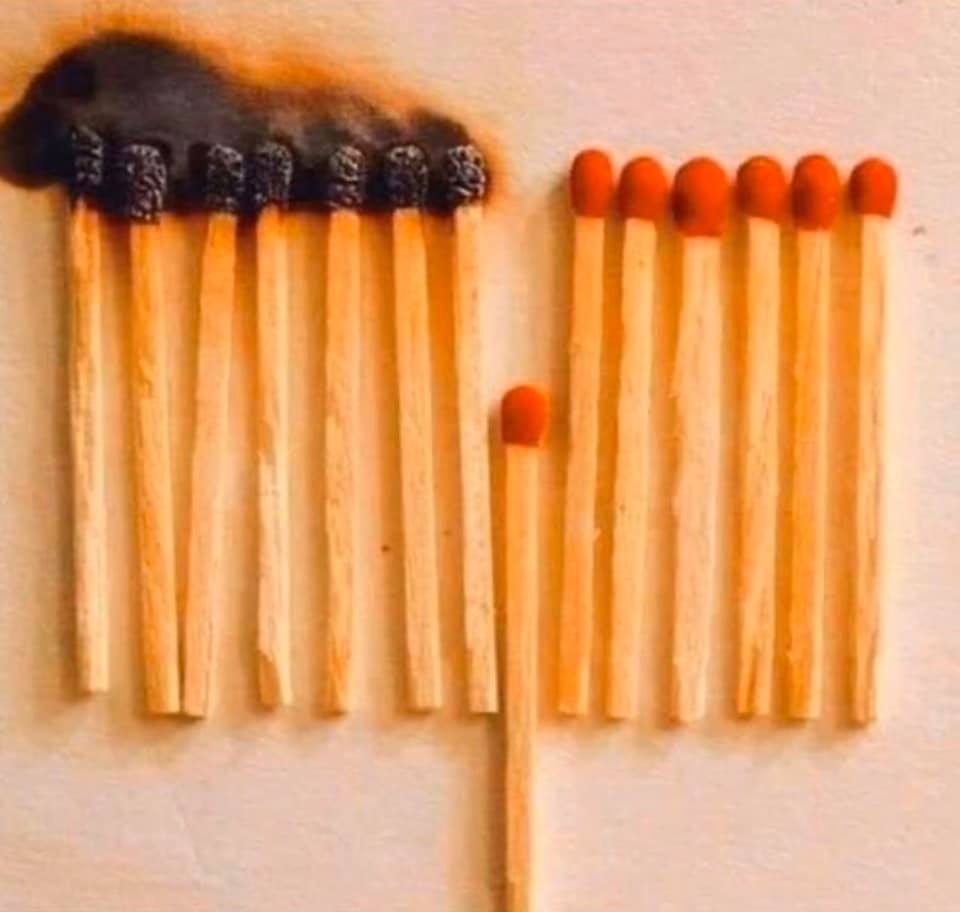
By now, most of us have seen the match imagery of stepping out or removing one’s self from the path of a virus or disease. And, while, different countries and governments are responding differently to the spread of COVID-19, many are looking to the past for a path forward through uncertain and unknown times. There are lessons being revisited from the more recent epidemics of SARS, MERS, and Ebola. But let us go back some nearly 400 years ago, and learn from Eyam.
The Outbreak
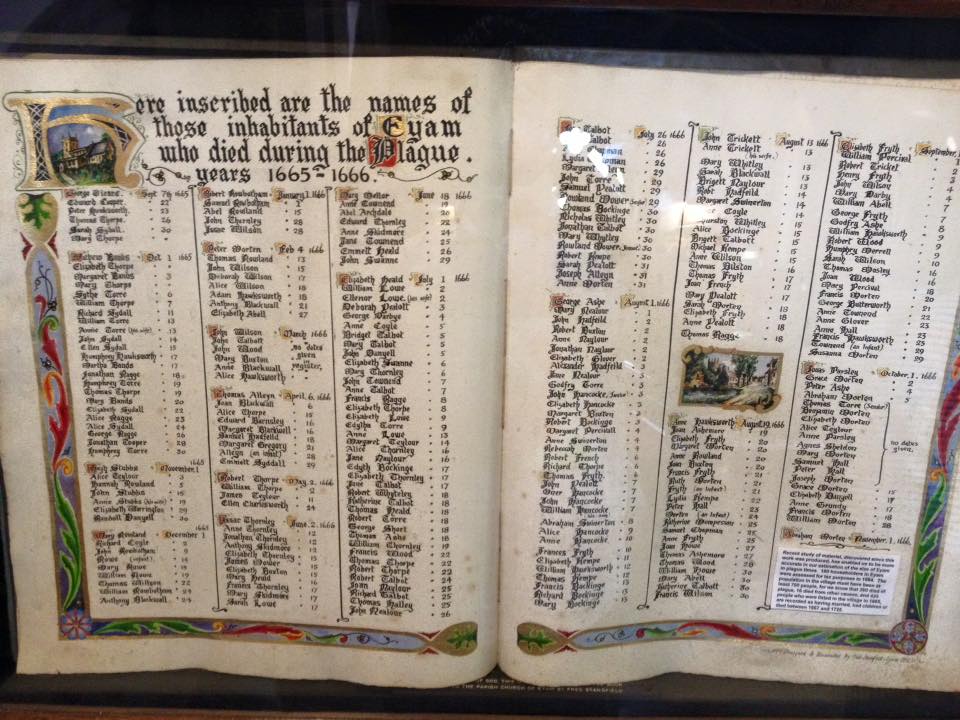
I am no historian and it’s probably easier to go read the Wikipedia article on Eyam or visit the Eyam Museum itself. Suffice it to say, that this English village had an outbreak in 1665 when flea-infested cloth from London was delivered to the tailor of the village. A small village at the time, Eyam’s population of a little more than 350 people was decimated over the course of the two years of enduring the disease, some 267 people died. If you visit the village church, you can see the book where their names are recorded.
I snapped a picture of the recorded names of those who died during the outbreak while visiting St Lawrence parish church in Eyam in 2016.
The People
Most credit the decisive action of the town’s Church of England priest, William Mompesson, as playing a huge role in the village’s response to the Great Plague epidemic. Before social distancing was a popular catch-phrase, Mompesson and other town leaders decided to enforce a quarantine — no one in or out of Eyam. Mompesson and his wife, Catherine, sent their children (healthy at the time) to go live in Sheffield for the time being. William had actually wanted his wife to go, but she was committed to remaining at William’s side to help serve her fellow neighbors during the epidemic.
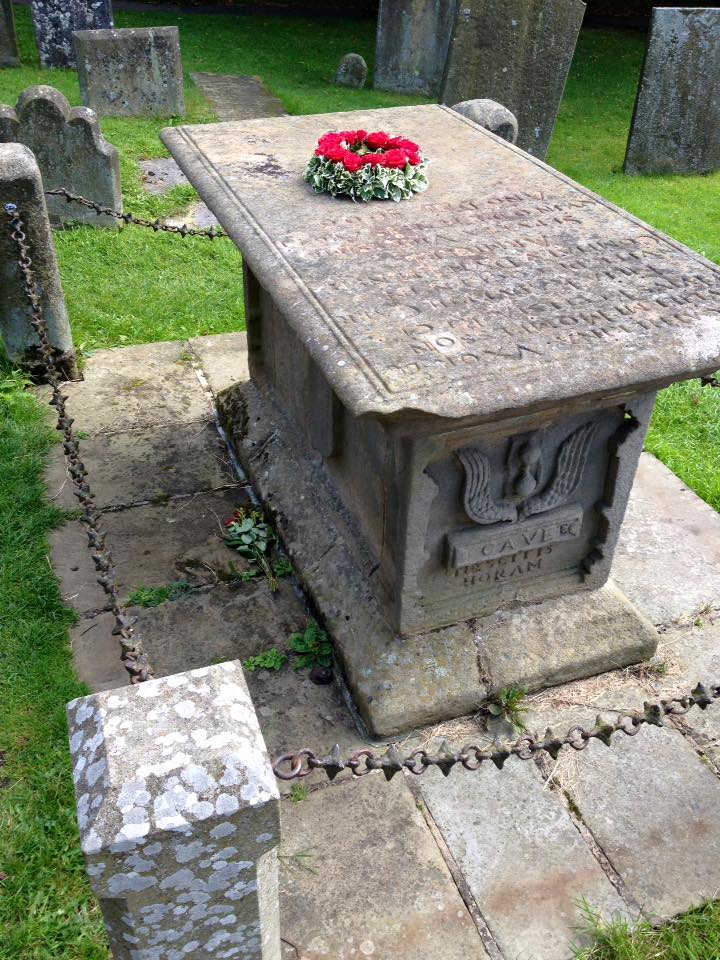
Catherine Mompesson’s grave, decorated with a wreath, stands as a reminder of Christian love and service in the midst of great hardship and loss.
History also records another name famous in Eyam — Elizabeth Hancock. She buried her husband and six children, over the course of a week, during the outbreak. The town leaders had established some ways to try and limit the spread of the plague including families burying their own dead and using a different gravesite, instead of the church graveyard.
Steps Taken
I’ve already mentioned some of the steps taken, but additionally, the village of Eyam setup boundary stones — as a way of warning and keeping people within a particular boundary and keeping outsiders from encountering the plague from the village, itself. Here, people from the outside would deliver different food and supplies and resources for the village without having to come in contact with the village. There were appointed times and deliveries.
Mompesson is also said to have filled a well with vinegar. This was primarily used for any trading that the townspeople needed to do. They would dip coins into the well to pay for the supplies, the thought was that the vinegar would kill off the disease and prevent the spread.
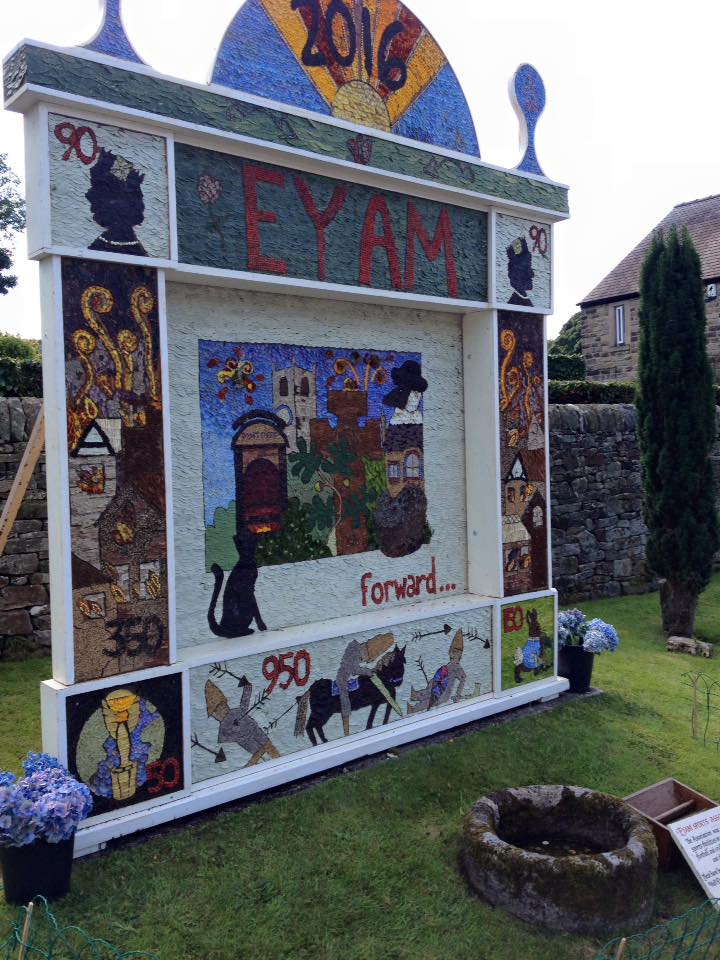
Each August, there are a number of “well-dressings” throughout the English country side (Peak district) where artisans use different local flora and natural materials to tell a story or paint a picture tied that town’s history. Pictured here is a well-dressing from Eyam, I’m not sure if this is the well that Mompesson poured vinegar into or not. There are a couple of wells in Eyam.
I realize that history will probably forever debate whether the steps taken by William Mompesson and others did any good, but for a people who did not have the technological advancements and resources of our day, you can see that they did what they thought was best to try and limit the spread of the disease.
The Lessons
So, what does this got to do with us anyway? I try to often connect what I write about to those persons of faith and also a connection for football and family. So let me share just a few lessons that I believe we see and learn from Eyam.
A Lesson of Love
Perhaps the greatest lesson that stands out to me is how several of the people of Eyam live out the texts of John 13:34-35, John 15:12-13 and I John 4:7-21. William and Catherine Mompesson choose to stay and serve their neighbors. Another minister, Thomas Stanley, was part of the efforts to lead and to serve. Even the “unofficial village gravedigger,” Marshall Howe — continued his service throughout the epidemic. In all that they did, recorded and unrecorded, seen and unseen, we can see and know that they did so out of love.
Jesus gives the “new command” in John 13:34-35, also known as the love command. That command, to love one another, cannot be simply made through mental assent. That command goes beyond “social distancing” and other personal safety precautions. The command to love one another is about sacrifice and it is modeled by Jesus who made the ultimate sacrifice for each of us. And that love (that Jesus gave for us) rightly understood, motivates us to love others — not just in greeting card fashion, but in real, tangible ways.
Greater love has no one than this: to lay down one’s life for one’s friends.
John 15:13, NIV
The lesson of love is a lesson for us today during the COVID-19 pandemic. Will history record this as a Great Plague? We do not know. That is not the point. But the response of Christian people during this time needs to be one of love. Love in practical ways. Love that serves fellow neighbor. A love that stays in the midst of the troubling times. A love that doesn’t exhibit fear or panic, but demonstrates the all-encompassing, peace of God.
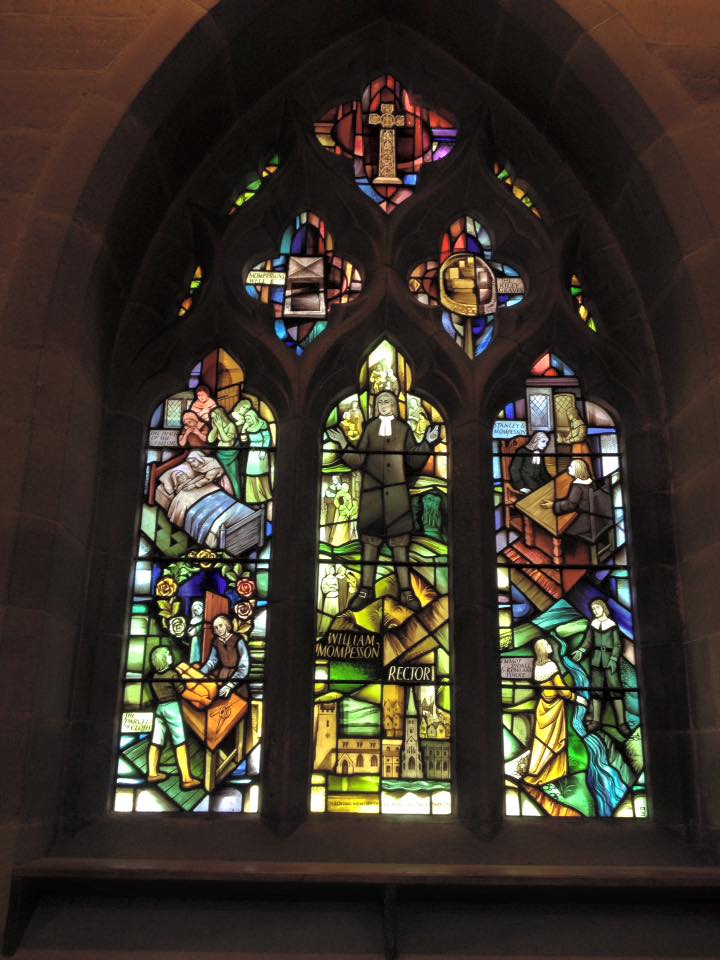
Stained glass in the Eyam parish church tells the story of The Great Plague and it’s people.
Do I need to write out practical ways that this ought to happen? The loving thing to do may be keeping one’s self at distance, or respecting orders put into place (even if we might question effectiveness, etc.). Or, the loving thing may be leaning into a particular need, point of service or request for help. The loving thing may be paying wages to the one who is employed and under your care. Each one of us will need to listen carefully to God in the ways that we are to love during this time.
A Lesson of Hope
Within the history of Eyam during The Great Plague, there are lessons of hope that we can take away. We can see it within the lives of the village people and the actions of the leaders. The Mompesson’s sent their children away — they wanted their children to have a greater chance to remain healthy and to live life. They had hope that the plague would eventually pass and diminish. They had hope that life might carry on and the children could return. They didn’t know that they would never be able to say goodbye to their mother.
Elizabeth Hancock eventually left Eyam and went to live with a still-living son in neighboring Sheffield. The grief she carried with her was undoubtedly immense and many accounts said that she “fled Eyam,” but I think it important to see that she went to be with her son. She didn’t give up on life. She didn’t give up some sort of hope that life could still be had in the face of so much loss.
There are other stories — some less known — that exist as one simply walks down the streets of Eyam. Plaques outside of homes and tablets and memorials inside Saint Lawrence, tell the stories of others.
A plaque outside of one of the “plague cottages” of Eyam tells of the former inhabitants and their deaths. The memory continues on and they are remembered annually, here in 2016 with a colorful keeping of the front garden.
But there are two forms of hope that we see in Eyam — a hope for tomorrow and a hope for the future (eternal). Christian people must live and be people of the here and now and people of the time which is to come. We are travelers on this earth — but our hope and treasure (and eyesight) must be lifted higher to that time which is to come. To the eternal and to being with Jesus in heaven.
The boundary stones that Mompesson and others used to set the village apart were not going to be an impenetrable boundary for the rest of time. But they knew and believed that they needed to isolate and separate themselves until a later time. Even within the time of quarantine, the life and activity of the village didn’t necessarily cease — trade still happened, fields were still plowed, ore was mined, cotton and silk weaving was still happening.
Even love and relationship continued. Perhaps one of the tragic love stories of this time was between Emmott Sydall and Rowland Torre. Betrothed to one another, they continued to meet throughout the plague epidemic, but kept distance from one another — Emmott’s family having contracted the plague and not wanting Rowland to catch it as well. Their story is depicted in the stained glass image above (lower right corner) and has been revisited and told in various different media and forms.They continued to meet, continued to love because they held hope that the plague outbreak would pass and they could be together, again.
A Lesson of Faith
Also within the story of Eyam is a lesson of faith. During this time, it is said that the village turned to William Mompesson for guidance and leadership in response to the plague epidemic. I don’t know that many people in the world today are looking to the church — and this may be more culturally and time-nuanced, but Mompesson and Thomas Stanley took up the reigns of leadership. They demonstrated a faith in God and they exemplified this to the people of Eyam.
One such step of faith, was continuing to hold worship services throughout the epidemic. While the decision was made to hold services in the open-air as a precaution against putting the ill in too close proximity to those who were healthy, the decision highlights a simple truth: in times of physical sickness and disease, there is still a need for spiritual nourishment and refreshment.
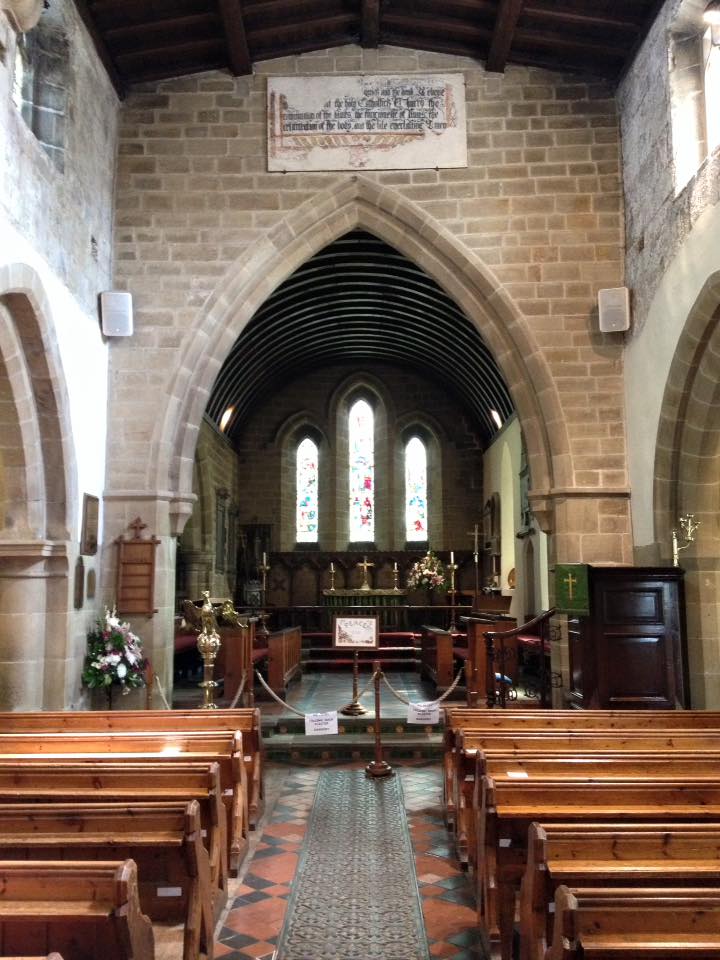
The interior of Saint Lawrence parish church Eyam 2016. Empty as it would have been in the years of 1665 and 1666 when the church held worship services outside to try and prevent further spread of plague.
Mompesson and Stanley would have both likely been impressed with the words from Hebrews 10:23-25, which says,
Let us hold unswervingly to the hope we profess, for he who promised is faithful. And let us consider how we may spur one another on toward love and good deeds, not giving up meeting together, as some are in the habit of doing, but encouraging one another—and all the more as you see the Day approaching.
Hebrews 10:23-25, NIV
This passage — mixed with words of hope and faith, serve as a reminder that even in the threat of disease or other times of difficulty and discouragement (for the recipients of the letter of Hebrews it would have been Roman persecution) that the people of God, the followers of Jesus need to keep gathering and getting together. They need to remind each other of the hope that they have that is beyond this world and all that it holds — this is an essential part of Christian faith.
Perhaps you, like me, have walked or driven by some large church building in the past couple of weeks. The building(s) sit empty for the most part — but this is not The Church! The Church is comprised of the visible and invisible — those true believers, in all the world, for all time. Part of the visible Church today is God’s people gathered, assembled for worship and mutual fellowship, encouragement, service, and spiritual growth . The Church is made up of people, not bricks and building materials (no matter how ornate or common).
In Closing
Friends — faith, hope, and love. The most important lesson from Eyam, the love shown and the love that we ought to show. If you are a follower of Jesus, if you are a person with faith in him, then the outflowing from that faith and hope and the love the we have received makes all the difference in the world and to the world. The result will be a bright shining in a dark world, a worthy example. It will be the way that the world, in the words of the hymn, “know we are Christians…by our love, by our love.”
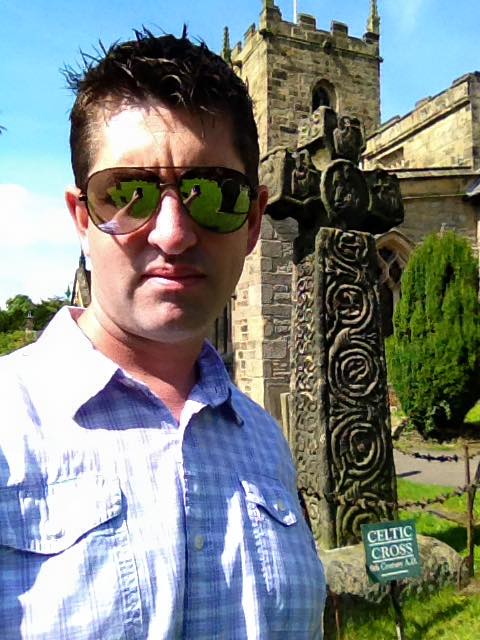
I take a selfie in front of a historic, 8th cent. Celtic cross in the Saint Lawrence parish church graveyard. (Eyam, 2016). The cross reminds us of Jesus’ ultimate act of love — the giving up of his life to reconcile people back to God.
https://soccerchaplainsunited.org/wp-content/uploads/2020/03/eyam-2016.jpg960720Brad Kenney/wp-content/uploads/2022/11/SCU_Seal_Logo-300x300.pngBrad Kenney2020-03-22 12:00:002020-03-23 14:24:21From the Rev: Lessons from Eyam
Well, technically, Major League Soccer (MLS) began on the last day of February for the 2020 season, but close enough. As the season kicked off last week (and the Colorado Rapids were the first game) it started the 25th season for the top flight soccer league in the U.S. The MLS season has had varied lengths in its 25-year history, and most recently the league condensed its season to run league competition games between the months of March and November.
34 games are par for the course — 17 home and 17 away; throw in a few exhibition games, an Open Cup tournament, weekly training sessions and travel and it makes for a busy 9 months. But this is just games! The preseason usually begins in the end of January and there is a draft in the second week of January.
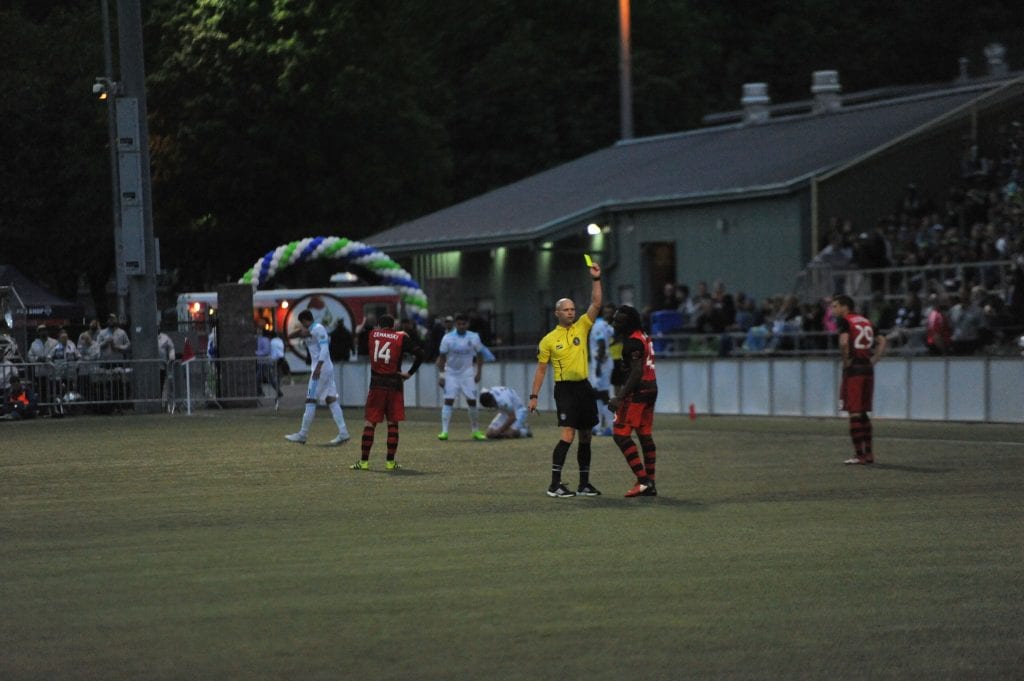
Preseason is over and things start to count — games, yellow cards, everything.
For a chaplain and for the athletes and coaches, there is a short two months (mid-November to mid-January) to fit in some of the typical “life” moments — whether it is a vacation, or a wedding. Sometimes, players and their wives try to even work out their family planning so that they can have a newborn during the “offseason.” It helps athlete can be more present with their wife and family! It doesn’t always work out, but they certainly try.
March and the start of MLS also, though, can be a difficult time for those who have recently left the game. There can be a certain amount of grieving that accompanies the start up of the season — no matter if it is the first year or the tenth year away from the game. The transition can be really difficult and many struggle to move on to the next chapter.
So, this March — whether you are into March Madness (college basketball) or another sport (like baseball’s spring training) — remember to pray for those that are playing and participating in sports (professional and other levels). Whether the athletes, coaches, staff, or the chaplains — pray for them. Pray for the chaplain’s work and ministry.
Here are some things that you can be praying for:
Travel demands and pressures
Issues of performance
Struggles with injuries and identity
Thank you for your prayers and for your support.
https://soccerchaplainsunited.org/wp-content/uploads/2020/03/25th-Season-logo.png19221819Brad Kenney/wp-content/uploads/2022/11/SCU_Seal_Logo-300x300.pngBrad Kenney2020-03-06 12:00:342020-03-09 13:45:15March Means MLS
Well, it didn’t exactly get said that way, but recently, a Soccer Chaplains United chaplain shared with me this encouraging story.
His particular team had gone out recruiting some high-level talent for the upcoming season. Ongoing negotiations were going well, but the player made a potion of asking for one particular item in the recruitment process. Does your club have a chaplain? He wanted to make sure that the club had a chaplain that was servicing and available to players and the organization. It had become part of his criteria, essential component to vetting which club to play for.
It’s a great filter — does a club or organization value its people enough to enlist the support and care of a chaplain? Does an organization realize a holistic nature for its people — athletes and staff — and utilize a spiritual and pastoral care provider?
The basis for this particular player asking that very question came from him receiving a well-rounded sense of support from another Soccer Chaplains United chaplain in the city and team where he had most recently had a contract and played for a number of years. Because of the excellent care and support he received from that chaplain, he has started to ask the question, have you got a chaplain?
I guess it would be any founder of a chaplaincy organization’s dream for the constituency that we aim to serve to demand that there be chaplaincy with their next team or next club. I don’t know if this becomes a growing trend, but it is a testimony and it is a testament. That as we care well for people in this difficult industry and sport, that it can become part of the bar, part of the litmus test for other organizations and part of one’s discernment about becoming involved, working with, or signing a contract.
It is my hope and prayer that a growing number of coaches, executives, and owners will see and realize the value of having chaplaincy within their organization and follow suit. And, of course, Soccer Chaplains United will be there to engage in the conversation.
https://soccerchaplainsunited.org/wp-content/uploads/2019/12/signature_1577748929.jpeg34564608Brad Kenney/wp-content/uploads/2022/11/SCU_Seal_Logo-300x300.pngBrad Kenney2020-01-14 16:48:362019-12-30 16:58:22No Chaplain, No Contract
One day left. As I write, I have one more day until I go on sabbatical. To confess, I am nervous and afraid. What if…? is the question that most hounds me.
What if people don’t understand? What if people don’t agree? What if people need me? What if the organization, the ministry, the work tanks? What if…? And that’s not just all.
What if I don’t use the time well? What if I don’t encounter God? What if I am unable to find rest and renewal. What if…?
I podcasted earlier this week some thoughts on sabbath and sabbatical. As I have been explaining to people, even to my own family — God gave us instructions to rest (people and animals) every week. And God gave instructions to rest (the land) every seventh year. I’ve been at it for nearly 20 years (am I 3x overdue?). I am not a farmer — but my vocation is similar to that of one: there is tilling, planting, cultivating, watering, and harvesting elements to my work.
I wish I had more stories of farmers who actually rested their lands in those seventh years. What happened to them? What happened to the land? Did they survive? Did they crash and burn? Did they and the land flourish?
I recall someone — either a seminary professor or in a book somewhere — stating that there is no evidence that the nation of Israel ever obeyed the command to allow the land to rest every seven years. No evidence! Gulp!
I have known some pastors and ministers to go on sabbatical only to wind up leaving the ministry altogether when they returned — perhaps they were too burned out and the engines never were able to reignite. I have some of these questions as well — I have been going at such a high pace and rate for so long now, how do I slow down? How do I shut off? How do I disengage? (and then how do I get going again?)
Some have wished me well. Some have wondered what exotic location I will be off to or have encouraged me to have a great “time off” — no, it’s none of this. It’s got to be different. It’s not a vacation. It’s not a stay-cation. It’s not _______. But then again, not having ever done this, I can’t quite really say what it is either.
Pray for me. Pray that I find good, soul rest. Pray that I have meaningful time with God. Pray that my spirit and soul awaken to the new thing that God wants to do.
Last week, I had the terrifying privilege of trying to change a flat tire on Southbound I-25 near Denver, CO. With each pass of a semi truck or vehicle, the wind buffeted the car while I fetched out the spare tire and jacked up the car for the first time in my memory. I needed to look at the owner’s manual to even understand where the spare tire was on the vehicle. I also think it is the first time in perhaps 15 years that I have had to change a tire and, I am thankfully still alive.
Driving to the tire shop, I arrived — discouraged with the setback, but grateful no harm and no further damage other than the tire. I sat in with the tire shop employee. We looked at the similar tires to replace with. I asked him, “When were the tires purchased?”
“May, 2012. It was with 196,000 miles on the car. How many miles do you have now?”
“295,500”
“Wow! I have never seen that. These tires are rated for 60,000 miles.”
“I think God had something to do with it,” I replied.
As I sat waiting for the tires to be put on the car, I couldn’t help but constantly give God praise. 100,000 miles. God’s faithfulness over those miles — no accidents, no scratches, and it took an I-25 bolt puncture to take down my tire and literally force me into new ones (to be honest, I feel I could have gotten through maybe one more winter with them).
I later overheard the shop sales guy telling the technician — “Can you believe this? This guy got 100k miles on these tires!”
The longer that I am on this faith journey with God, it is more and more the testimony of His faithfulness to us. Some people pray for the better job, the better home, more resources or means. But in my experience, God does this amazing thing for His people — where the treads on the tires last longer, the insurance premiums are low because the family is healthy, and more and more examples.
Now don’t get me wrong — I am not espousing a “health and wealth” gospel here. I am not saying, “If you just have enough faith…” or “If you are good enough….” But what I am saying is the ways that I have seen God be faithful to me and to my family, even in the midst of our need. It reminds me of God’s faithfulness to the people of Israel in the midst of their wilderness wanderings. In Deuteronomy 29:5, God reminds them,
During the forty years that I led you through the wilderness, your clothes did not wear out, nor did the sandals on your feet.
The Lord God, speaking to the people through Moses
I don’t wear sandals much. But, tires, well that’s a different story.
It’s not just the tires, though — I have seen God make a lot of things “last” longer for me and my family — clothing, jackets, shoes, furnaces, hot water heaters, and more. And I can’t explain it. I can’t sit here and tell you that my faith is better or stronger. I can’t say that I am less sinful. I can’t say that I am more honored by God than any one else. All I can say is, “He (God) is faithful, even when I am not. Praise be to God!”
Praise God that His faithfulness is not dependent upon my own.
Praise God that He takes care of His people.
Praise God that He is so good to me.
Praise God for 100,000 miles (and more) of faithfulness.
We may request cookies to be set on your device. We use cookies to let us know when you visit our websites, how you interact with us, to enrich your user experience, and to customize your relationship with our website.
Click on the different category headings to find out more. You can also change some of your preferences. Note that blocking some types of cookies may impact your experience on our websites and the services we are able to offer.
Essential Website Cookies
These cookies are strictly necessary to provide you with services available through our website and to use some of its features.
Because these cookies are strictly necessary to deliver the website, refusing them will have impact how our site functions. You always can block or delete cookies by changing your browser settings and force blocking all cookies on this website. But this will always prompt you to accept/refuse cookies when revisiting our site.
We fully respect if you want to refuse cookies but to avoid asking you again and again kindly allow us to store a cookie for that. You are free to opt out any time or opt in for other cookies to get a better experience. If you refuse cookies we will remove all set cookies in our domain.
We provide you with a list of stored cookies on your computer in our domain so you can check what we stored. Due to security reasons we are not able to show or modify cookies from other domains. You can check these in your browser security settings.
Other external services
We also use different external services like Google Webfonts, Google Maps, and external Video providers. Since these providers may collect personal data like your IP address we allow you to block them here. Please be aware that this might heavily reduce the functionality and appearance of our site. Changes will take effect once you reload the page.
Google Webfont Settings:
Google Map Settings:
Google reCaptcha Settings:
Vimeo and Youtube video embeds:
Privacy Policy
You can read about our cookies and privacy settings in detail on our Privacy Policy Page.

.jpg)