
Mary Willingham spoke with ESPN about UNC athletic academic practices which raised an internet maelstrom earlier this week.
This past week, a story broke about an incident a few years ago at the University of North Carolina where a student-athlete was awarded an A- grade for a ten-sentence paper. The story went viral as did the criticism surrounding the “paper classes” that seemed to be part of the college landscape to prop up collegiate athletes and keep them on the field in spite of poor academics. In recent days, further details have come to light on the story. The stories themselves beg a couple of questions, firstly we might ask, “What is truth?” in the same vein that Pilate once asked that famous philosophical question. I have come to learn in my time in the world that the truth (as conveyed by humans) is usually somewhere between two extremes as we turn and twist the truth for our own means and our own gains.

Rebecca Herrera signs a letter of intent with Texas A&M (2008).
But, in spite of the broadcasting faux pas of ESPN, there has always been suspicions around collegiate athletes having different standards or special treatment when it comes to academics and sport. It is no secret that Division-I college athletes usually have access to free tutoring and other resources as a part of scholarship benefits. My own sister-in-law, Rebecca Herrera, on scholarship with Texas A&M (2008/2009) women’s soccer program and experienced some of the offerings that a Division-I college athletics academic support.
Being a student athlete was like having a job – going to classes, practices, travel. The expectations of doing well in classes and doing well in athletics…the amount of effort in doing both of those things well was difficult…

Rebecca Herrera (#9, Texas A&M) defends in a game against the Florida Gators.
The weight of those expectations is not shouldered by athletes alone, there is a lot of support from the schools that provide scholarships to their athletes. Herrera went on to describe some of the other assistance that was afforded to her as an athlete to help ease the burden and manage playing for the girls soccer team,
Student athletes had some privileges including priority for signing up for courses, an academic center where we could access tutors and other people to help manage our academic load, and there were some classes that could be taken that consisted of just an online exam…
Whilst the argument might be made that student athletes are in need of greater support because of the demands, there are those upset by the practices both professional and student, alike. While it is beyond the scope of my writing to enter into that argument, I do want to make a clear appeal – the existence of these courses and the academic system in general is not (in my estimation) helping to prepare the student-athlete for life beyond college and sport in general. There is a severe handicap, in fact, when schools place such a high importance and value on sport over the academic. I acknowledge that some schools are working to change this perception and others are working to change the practice.
 But regardless of the athlete and the environment of academics that they come from, one of the roles of the chaplain in professional sport is assisting athletes (really seeing them as people) wherever they are in the process of learning and growing – both personally and professionally. This is sometimes much greater with athletes coming from countries and cultures where schooling and education are lesser in importance compared to playing football professionally (European and South American countries, especially). In these places, young athletes can sometimes bypass educational development and opportunities altogether. America is trending toward more emphasis on sport and less on academics – to the point that many of the athletes that I work with have left school prematurely to play soccer. There is an increasing number who have not gone on past high school education (at least in traditional ways of going to college before beginning a professional career). While there are incentives to complete college, there is little resource or motivation for a player to do it while playing.
When I mentioned some of my role as a chaplain to my sister-in-law, she relished the thought,
I think a team chaplain would have really helpful in college. Just even to work through some of the difficult decisions and to learn how to handle some of the (ethical) issues that we faced as student-athletes.
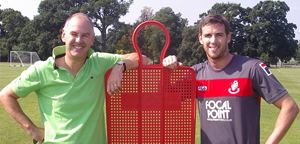 If helpful at a collegiate level, you can imagine how much more helpful at a professional level. I am coming to realize more and more, that some of my work as a chaplain is to help the young men that I work with to become more solid in life and not just in academics, but in life and faith. Part of my role is helping them in the process of going from boyhood to manhood. Helping them to become real men – men of integrity, men of faith, men of honor, men of valor – men that are not, paper thin.
Blessings,

Rev. Brad Kenney
 Whilst scanning the Twitterverse a few weeks ago, former Colorado Rapids Forward Andre Aukpan (@auakpan), now with New York Red Bulls, highlighted a story on the National Football League’s
  First, with the popularity of sports in modern-day culture, many young athletes can feel trapped – they have sometimes abandoned education for the sake of entering sports early. Young athletes have many times even missed out on typical social and mental growth and well-being (sports taking primary importance in life). In some cases, they have missed crucial developmental stages or “rites of passage” moments for the sake of the sport. When it comes time for the end of a career – many can feel trapped because the sports world is all that they have known, all that they have invested in.


 Firsts. This season, the Colorado Rapids will encounter many firsts – moments where the team and organization find themselves as never before. For example, 2014 is the first season that the team is being coached by a former player (
 As a chaplain, much of my role is to remind people of
 I had the privilege of attending portions of the recent ID camp held for Colorado high school student athletes at Valor Christian High School this past week. The camp was put on to give students and college coaches an opportunity to be observed in hopes of receiving scholarships or invitations for possible openings on college teams. Of the 100-some students and 25- some college coaches participating in the event, there was an air of anticipation and hope – perhaps this might be an opportunity to receive an offer from a college to study and play the sport that they had come to love.
 As I reflected further, I was reminded of the life of Jesus and his own ID’ing that took place as he set out to begin ministry. We read in Luke 6:12 that Jesus spent some intentional time praying to God before he chose the twelve men that would walk closest with him while he was here on earth (maybe you are thinking about the 11 true apostles – but I am not trying to make soccer team parallels here, honest). From history, scholars surmise that these apostles and disciples that Jesus called were probably young men – maybe even teenagers, who having not made the grade for further religious instruction were settling into life as tradesmen (fishermen, tax collectors and more).
 Of course, as team chaplain, I see similar moments when professional athletes and coaches and staff face decisions that are seemingly monumental – choices about career, family, retirement, contractual negotiations, and other life issues can be difficult to discern and choose the correct path. These are moments – moments when we are looking toward the future – that we ought to seek God. We need to find mountain top moments and spend nights praying to God about what we ought to do. And in those spaces, we need to listen and hear the voice of God so that we might make wise choices, wise decisions because we cannot accurately ID the future on our own.
 If you know anything of the Greek word uses for love – there were four:
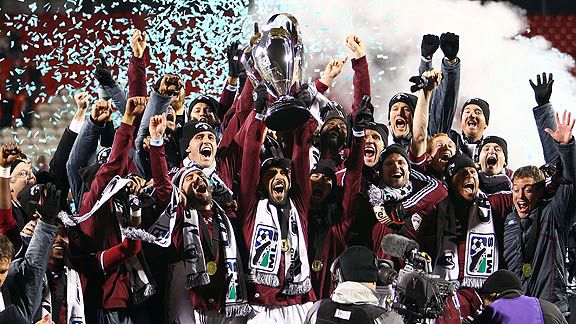 Part of my personal experience with this was when the Colorado Rapids won the Major League Soccer Championship game in 2010. I was there, on the field, as the players and coaches their families and the fans celebrated the first championship in team history (still one of only two championships to come to Colorado since those ’98 Broncos – National Hockey League Av’s in 2000-1 being the other). It wasn’t 45 minutes after leaving the field that coaches were having to determine which players on the roster would be unprotected for the MLS expansion draft – players didn’t even get to celebrate the championship before being told that they might be traded or waived.

 The Colorado Rapids have been in the news of late, particularly over the situation with the head coach, Oscar Pareja. For the last couple of months, there have been stories that surface about Pareja’s pursuit by his former club FC Dallas. Beginning in November of 2013,